


By Sham Islam
Who will be victorious in Bangladesh when 2026 finally comes around?
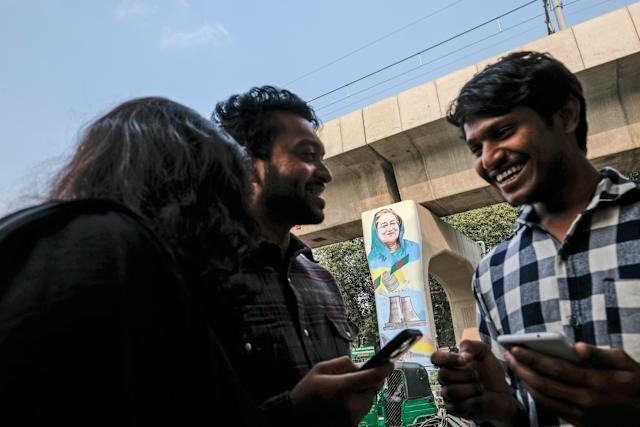
And the real story may lie beyond those recognisable names. The deciding force in 2026 is not the machinery of parties nor its longstanding alliances; it’s the youth of Bangladesh. Close to 50 million young voters, about a third of the electorate, are set to recast the country’s political arithmetic. Each vote they cast has the potential not just to elect a government but to disrupt the routines, premises, and hubris of decades-old politics.
A Sleeping Volcano Awakens
For years, the political calculus in Bangladesh has revolved around a narrow circle of parties and personalities. Governments came and went; the daily realities of young people remained mostly constant. There was continued job insecurity, merit ossification due to nepotism and public institutions falling behind a fast-changing society. Gradually, disillusionment hardened into apathy. A respectable number of young Bangladeshis took to viewing elections as rituals devoid of any significance, occasions best walked away from or sat through.
Curtails, even with forming the vast majority of the electorate, the inclusion of youth voices in serious political discussions was noticeably absent. Too often, their involvement has been siphoned down to foot soldiers at rallies or online cheerleaders, rather than stakeholders in decision-making. This inattention bred a generation of frustration — silent on the surface, but plenty violent underneath. Like a snoozing volcano, the advance of pressure was relentless. And in July 2024, it erupted.
The Discontent: A Crisis of Confidence
To apprehend 2026, you have to reckon with the culture that repelled young people from politics in the first place. The problem wasn’t one party; it was a system that, for too long, had broken its promises. Promises of work fell flat in the face of corruption and nepotism in hiring. Again, education felt disjointed from the job market’s needs.
Surveys conducted by organisations such as ActionAid Bangladesh found some startling truths – more than half of young people believed that nepotism was the primary barrier to employment, and a mere one in seven felt that their education equipped them sufficiently for work. The product is a rising pool of youth disconnected from work or school, a dangerous social and economic liability.
Political expression offered little relief. Constricting laws and shrinking civic space rendered dissent expensive. Social media was the venue of choice for memes, satire, and outrage, and these were bought and sold in place of structured debate.
Earlier elections, and when uncontested seats lack even excitement, it’s already the last nail in the coffin of FAITH. By that point, a lot of the parties had already written off youth participation entirely — an error of historic magnitude.
July 2024: When a Generation Made Its Voice Heard
Protests over the quota reform on July 8th, 2024, escalated rapidly into a mass uprising. It wasn’t just policy; it was a refusal to tolerate corruption, inequality, and political repression. It was an uprising led overwhelmingly by young people, students from schools, colleges and universities, worried they would have no future.
July was a watershed in the history of Bangladesh politics. It was a shattering blow to the myth of the “apolitical” youth. These young people stood up and spoke out, and they made the nation pay attention. Those sacrifices the martyrs make to provide blood, like Abu Sayeed, lend the movement moral force. Out of this struggle, the idea of a “July Charter” was born, not just a written instrument but a shared vision for what would constitute a fair, democratic, and accountable state.
Most importantly, July restored confidence. A generation once dismissed as disillusioned tasted the power of collective action. They learned a painful lesson: that change is not given from above but taken through pressure and participation.
The Ballot as Revolution
If July 2024 was the eruption of anger, the 2026 election is its vehicle toward reform. The country has some 127 million registered voters, nearly 50 million of whom are between the ages of 18 and 35, according to data from the Election Commission of Bangladesh. That is a number sufficient in itself to unleash a political tsunami.
And what if these young voters show up in force? The response is obvious: every established calculus P 3 collapses. These are the new voters who will motivate parties to address their issues or risk oblivion. Young voters are the ultimate game changers in 2026.
Their calls are unequivocal and unchanging:
Jobs on merit, not who you know.
Real-world education that matches real-world needs.
End of corruption and favouritism
Freedom of speech and real democratic inclusion
Politicians have started paying attention. The manifestos today talk the language of reform, of young people’s empowerment. But that’s no longer enough for this generation. With digital tools at their fingertips, they examine candidates, monitor promises and mould public opinion online. They are not only voters; they are watchdogs.
More Than an Election
The 2026 vote is not just about electing a government. It is linked to wider calls for structural reform; some even see it as a de facto referendum on the principles of July’s birth. Voting is no longer a passive act for young Bangladeshis; it’s saying the injustices they had resisted will not return.
A Generational Moment
For Bangladesh, there is no time like this to write its next course. Those once out of power now have the pen. One vote, if repeated millions of times, can force parties to reassess leadership matters, priorities, and accountability. If youth energy courses through the ballot box, its influence could go far beyond changing who is in power; it may also help redefine political culture itself.
The future, quite literally, is in young minds. And in 2026, maybe we’ll have a chance to see how the anger of a generation can be turned into a democratic force strong enough to rewrite history.


