


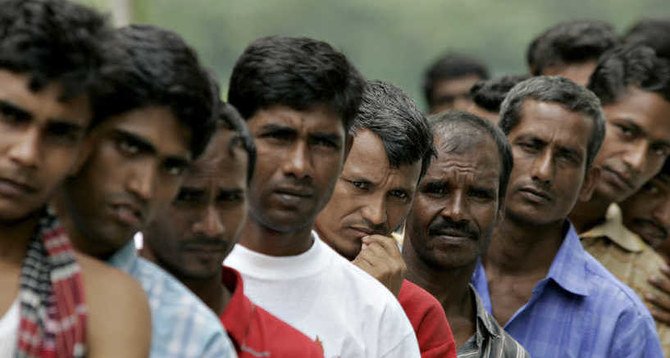
Navigating the friction of Middle East labour reform
Sham Islam | The Bengali Roots | March 2026
It was once called the termination of “modern-day slavery”. Doha’s, Riyadh’s, and Dubai’s skylines of glimmering glass seemed to signal, wave after wave, that they would eventually dismantle kafala, a system established over a decade ago for regulating migrant workers, by which they were legally bound to their employers’ whims and fortunes.
For the 2.5 million Bangladeshis working in the Gulf, these reforms, from Saudi Arabia’s Labour Reform Initiative (LRI) to Qatar’s elimination of the “Exit Permit”, seemed like a release into freedom.
However, as the dust settles on these “Vision 2030” initiatives, a sobering reality emerges. A new kind of volatility has been created: for the Bangladeshi diaspora, a transition from physical control to administrative complexity.
In the careful legislative commitments made by enlightened ministries versus the dictates of recruitment offices in Dhaka and Chittagong, a stark contrast emerges.
The Remittance Engine and the Cost of Entry
The stakes are high today; almost 6% of Bangladesh’s GDP comes from Middle Eastern remittances, which are the lifeblood of poor rural families from Sylhet to Cumilla. It is therefore a significant opportunity for these families, a visa to the Gulf.
A heavy toll is attached to the “golden ticket”; many Bangladeshi workers, despite reforms aimed at fair recruitment practices, still pay exorbitant “recruitment fees” ranging from $3,000 to $5,000.
These workers usually arrive in the Gulf with heavy bank debt already piled up on their heads, paying interest at rates that are usurious yet not legalised as such. Whether you default on your debts or not, psychologically, you are already dependent from day one.
Reform vs. Reality: Three Key Friction Points
This modernisation of the Gulf labour market rests on three legs, all of which are difficult for Bangladeshi migrants to balance.
Rewriting results: The Digitalisation of Contracts: In the past, various industries relied on verbal agreements; with Saudi Arabia’s ‘Qiwa’ platform and Abu Dhabi’s Mohre portal, they aim to tear down all such “fake” historical promises. If not registered digitally on these apps, it never existed.
When it comes to the practical use of these platforms, many white-collar workers are persistent; those who provide answers are highly professional. They can take the time to manage an adroit middleman and secure genuine negotiation savings for themselves over decades, but blue-collar labour, which constitutes the bulk of an international labour market such as this one, lacks the knowledge to use applications like these.
This leaves them at the mercy of the very employers and middlemen that these systems were intended to circumvent. Markets sit as something to be worked around. The Labour carefully kept loopholes in the mobility of labour: “absconding” means we will not tolerate it. By reporting a worker to the police as Huroob, an employer can instantly suspend the worker’s rights and thereby render him an ‘illegal’ alien when he tries to transfer his permit to another job.
The Skills Pivot: The Gulf Towards a Service-Centric Society. What we are observing is other nations’ move towards low-skilled labour, but with new types of visas that now support a service economy. Your “skills pivot” may leave behind Bangladeshis who have been working without any qualification since they were children and have almost made the backbone of the construction industry in this generation.
The “Free Visa” Myth and Nationalisation. Yet another place where this evolution can be seen is in the continuing quiet persistence of what amounts to a “Free Visa” myth.
Middlemen still sell people unofficial visas, telling them they can take any job anywhere. Big regional campaigns have already started to move labour back into strict digital regimes, with that “freelance” label initially struck off.
Foreign workers are further squeezed in this situation by yet more demands on residency from “nationalisation” targets. For example, ethnic Nepalese have become a favoured target in chasing quotas and playing with the market. It is a system burgeoning with unpredictability: simply because an entry visa for one gets cancelled as soon as another applicant from that country turns up. Voices from the Field:
“It says in the law that I can change jobs.
But if I do, my boss has warned me before the app updates that he’ll revoke my visa. The phone operates as an instrument for the administration, and even though his reasoning allows for freedom to take on new work, the fear is still right at my shoulder.”
Anwar H. – Construction Worker
“Instead of exercising physical control, is that how you are doing it now?” We are transitioning to control through administration. Digitalkafala is not so easy to see, though when you can set increasingly strict limits on the lowest-paid workers, it’s every bit as effective.”
Regional Labour Analyst
The Arab Free Labour Market: A Conference for Labour Unions.
Labour reform in the Middle East is an evolution, not an event. While the “Golden Visa” and “Green Visa” promise unrivalled flexibility for Bangladeshi doctors, engineers and IT experts, blue-collar workers remain under desperate pressure for employment.
Legislative progress is an important first step, but without harnessing grassroots pressure and providing robust pre-departure education in Bangladesh, the “Migrant’s Dilemma” will remain. For those millions who sail across the ocean in search of a better life, the fetters of tradition are just as digital as the complexity of the coming days.
Editor’s note:
This review is based on 2023 to 2024 labour policy data from the Saudi Ministry of Human Resources; the International Labour Organisation (ILO) reports on Qatar; and migration statistics for Bangladesh provided by the Bangladesh Bureau for Manpower, Employment and Training (BMET). While digital arrangements, for example, Qiwa and LRI, are already in place, immense potential exists at the regional and individual levels in utilising them.


