


A celebration of heritage, harmony, and Bengali identity
BENGALI ROOTS DESK
Pahela Baishakh, the first day of the Bengali New Year, stands as one of the most vibrant and culturally significant festivals for Bengalis across the world. Observed on the 14th of April in Bangladesh and usually on the 14th or 15th of April in India’s West Bengal, this day transcends religious, social, and economic boundaries to unite people in a shared celebration of heritage, identity, and hope. For us in Bangladesh, Pahela Baishakh is not merely a date in the calendar—it is a profound expression of our cultural roots, a day that reflects the very essence of being Bengali.
Historical Background of the Bengali New Year
The origins of the Bengali New Year date back to the Mughal era during the reign of Emperor Akbar. In order to facilitate easier tax collection from farmers, who relied on agricultural cycles, the emperor introduced a reformed calendar that aligned more closely with the harvest seasons. This calendar, known as the Bangla calendar, combined elements of the Islamic lunar calendar and the Hindu solar calendar. Over time, this system evolved into what we now recognize as the Bengali calendar, marking Pahela Baishakh as the first day of the year.
In Bangladesh, Pahela Baishakh has taken on a strong cultural and nationalistic identity, especially since the Language Movement of 1952 and the Liberation War of 1971. It became a symbol of unity and secularism, where people from all religions come together to celebrate their shared Bengali heritage. In West Bengal, India, the festival—known as “Poila Baisakh”—also holds deep cultural importance, especially among the Hindu community, though its spirit of festivity remains inclusive.
Preparations for the Festival
The excitement of Pahela Baishakh begins days before the actual day. In Bangladesh, people thoroughly clean their homes, decorate their surroundings, and prepare traditional clothes. Markets and shopping malls become lively as people buy new clothes, particularly in the traditional white and red color combination. Women often wear white sarees with red borders, adorned with floral ornaments, while men opt for panjabis or kurtas.
In West Bengal, similar preparations take place. Shops and businesses decorate their premises, and special sales and offers attract customers. For traders and business owners, Poila Baisakh is a significant occasion, as they prepare for the ritual of “Haal Khata,” or opening a new ledger for the financial year.
The Iconic Mangal Shobhajatra
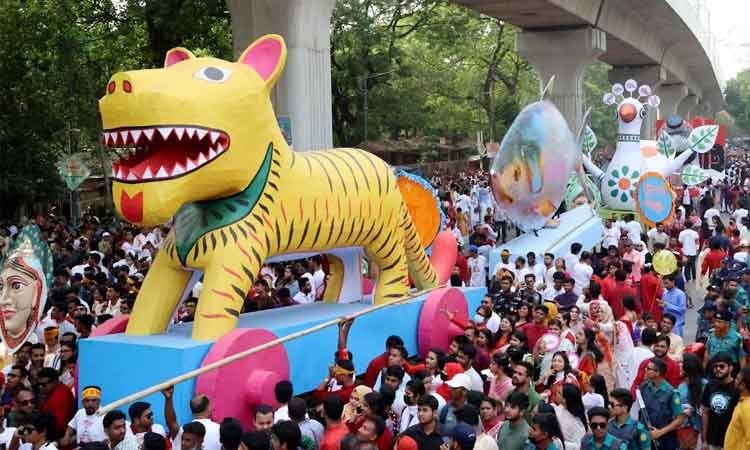
One of the most iconic features of Pahela Baishakh in Bangladesh is the “Mangal Shobhajatra,” a grand procession organized by the Faculty of Fine Arts at the University of Dhaka. This colorful parade includes large handcrafted masks, sculptures of animals and birds, and symbolic motifs representing peace, unity, and resistance against evil. Recognized by UNESCO as an Intangible Cultural Heritage of Humanity, the Mangal Shobhajatra embodies the spirit of inclusiveness and cultural pride.
People from all walks of life participate in this procession, carrying banners and chanting slogans that celebrate life and humanity. The vibrant colors, artistic expressions, and collective energy make it a truly mesmerizing experience.
While West Bengal does not have an exact equivalent of the Mangal Shobhajatra, cultural rallies, artistic displays, and performances are common in cities like Kolkata. Schools, cultural organizations, and communities arrange parades and programs to mark the occasion.
Music, Dance, and Cultural Performances
Pahela Baishakh is deeply intertwined with music and the arts. In Bangladesh, the day often begins with the soulful rendition of Rabindranath Tagore’s famous song “Esho He Baishakh,” performed at dawn under the open sky, especially at Ramna Batamul in Dhaka. Organized by cultural groups such as Chhayanaut, this event is a cherished tradition that sets the tone for the day.
Throughout the day, various cultural programs are held across the country, featuring traditional songs, dances, recitations, and theatrical performances. Folk music, including Baul songs, holds a special place in these celebrations, highlighting the rich rural heritage of Bengal.
In West Bengal, Tagore’s songs (Rabindra Sangeet) and other classical and folk performances also dominate the cultural scene. Cultural institutions and clubs organize events where artists perform dances and songs, celebrating the literary and artistic legacy of Bengal.
Traditional Food and Festive Delicacies
Food is an integral part of Pahela Baishakh celebrations. In Bangladesh, the most iconic dish is “Panta Bhat” (fermented rice) served with fried hilsa fish (Ilish), green chilies, onions, and various types of bharta (mashed vegetables). This meal symbolizes simplicity and a connection to rural traditions.
Street fairs and stalls offer a wide range of traditional foods such as pithas (rice cakes), sweets like roshogolla, chomchom, and jilapi, and seasonal fruits. Families often gather to share meals, strengthening bonds and creating lasting memories.
In West Bengal, festive meals include dishes like luchi (fried flatbread), alur dom, sweets such as sandesh and mishti doi, and a variety of fish preparations. While Panta Bhat is less common there, the emphasis on traditional Bengali cuisine remains strong.
Haal Khata: A Business Tradition
One of the unique aspects of Pahela Baishakh, especially in West Bengal but also practiced in Bangladesh, is the tradition of Haal Khata. On this day, shopkeepers and business owners open new accounting books and invite customers to clear their previous dues and start afresh.
Customers are greeted warmly, often with sweets and refreshments. This practice symbolizes renewal, prosperity, and good business relationships. In Bangladesh, this tradition is still observed in many parts, particularly among small businesses and traditional markets.
Fairs and Rural Celebrations
Pahela Baishakh is not confined to urban areas; it is equally, if not more, vibrant in rural regions. Traditional fairs, known as “Baishakhi Mela,” are organized across villages and towns in Bangladesh. These fairs feature handicrafts, toys, pottery, and various local products.
Cultural activities such as folk songs, puppet shows, and traditional games like “Lathi Khela” (stick fighting) are common attractions. These fairs provide a platform for local artisans and performers, preserving age-old traditions.
In West Bengal, similar fairs and community gatherings take place, particularly in rural areas. These events reflect the agricultural roots of the festival and foster a sense of community.
Symbolism and Cultural Significance
Pahela Baishakh carries deep symbolic meaning. It represents a fresh start, the shedding of past burdens, and the welcoming of new opportunities. For Bangladeshis, it is also a powerful reminder of our cultural identity and resilience.
The festival’s secular nature is particularly significant. In a diverse society, Pahela Baishakh stands as a unifying force, where people of all religions—Muslims, Hindus, Buddhists, and Christians—participate with equal enthusiasm. This inclusivity is one of the defining characteristics of the celebration in Bangladesh.
In West Bengal, while the festival has stronger associations with Hindu traditions, it is still widely celebrated across communities, emphasizing shared cultural heritage.
Modern Celebrations and Global Influence
In today’s globalized world, Pahela Baishakh is celebrated not only in Bangladesh and West Bengal but also by Bengali communities around the globe. From London to New York, expatriate Bengalis organize cultural events, fairs, and gatherings to keep their traditions alive.
In Bangladesh, modern elements have also become part of the celebration. Concerts, television programs, and social media campaigns add new dimensions to the festival. However, the core essence—celebrating Bengali culture and unity—remains unchanged.
Challenges and Preservation of Tradition
Despite its popularity, Pahela Baishakh faces challenges in maintaining its traditional character. Commercialization and the influence of global culture sometimes overshadow the authentic elements of the festival. There is a growing need to preserve the cultural integrity of Pahela Baishakh, ensuring that future generations understand and appreciate its true significance.
Efforts by cultural organizations, educational institutions, and the government in Bangladesh play a crucial role in safeguarding these traditions. Initiatives to promote folk culture, support artisans, and organize authentic cultural programs are essential for sustaining the festival’s legacy.
Conclusion
Pahela Baishakh is more than just the beginning of a new year; it is a celebration of life, culture, and identity. For us in Bangladesh, it holds a special place in our hearts as a symbol of unity, resilience, and pride. The festival beautifully bridges the past and the present, connecting generations through shared traditions and values.
At the same time, the celebrations in West Bengal highlight the broader cultural unity of Bengalis, transcending national borders. Whether it is the vibrant Mangal Shobhajatra in Dhaka, the soulful Rabindra Sangeet in Kolkata, or the joyous gatherings of Bengalis abroad, Pahela Baishakh continues to inspire and unite.
As we welcome each new year with hope and enthusiasm, Pahela Baishakh reminds us of who we are and where we come from. It is a day to cherish our heritage, embrace diversity, and look forward to a brighter future—together as Bengalis.


