


Pilkhana, sovereignty, and the unfinished quest for justice
By The Bengali Roots Desk | Dhaka | February 26
Even to this day, with seventeen years having passed, at night, every noise of gunfire still makes the hearts of all Bangladeshis shiver.
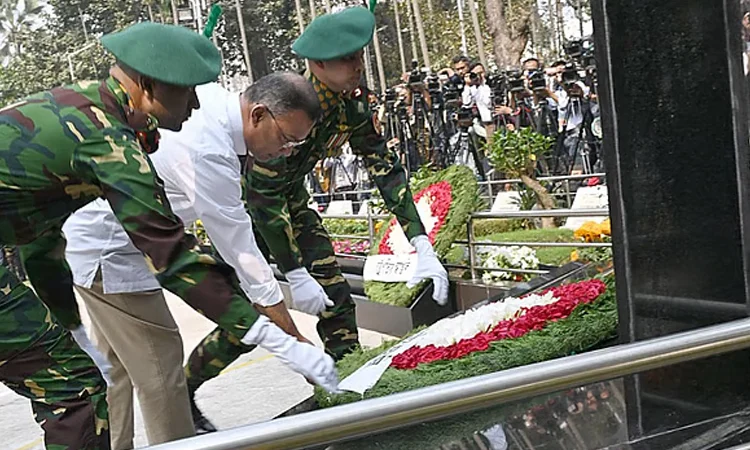
In mentioning the Pilkhana massacre of 2009 on Wednesday, Prime Minister Tarique Rahman said that it was part of a “conspiracy against the existence of the sovereignty of Bangladesh”, and he furthered a country-wide resolution to remember those who fell from that fateful event on.
He said this while attending an interaction between the families of 57 army officers slain (which remains one of Bangladesh’s darkest chapters) and those who remain in office. The function was held at the Army Multipurpose Hall in Dhaka Cantonment yesterday, which marked Jatiya Shaheed Sena Dibas (National Martyrs Army Day).
The Whole Nation Is Perturbed When Our Armed Forces Are Harassed
The army represents our sovereignty, said the Prime Minister, referring to the organisational and emotional setback the country sustained in February 2009. “I believe”, he observed, “the very sad incident at Pilkhana was an attempt to sabotage our independence.”
The Pilkhana massacre happened, as we all know, over a two-day period, 25 and 26 February 2009, at the compound of the then headquarters of Bangladesh Rifles (which has since been renamed and upgraded to a paramilitary force). A total of 74 people lost their lives, including 57 army officers.
Many analysts saw this not just as a mutiny but also as something that exposed serious ethnic weaknesses within Bangladesh’s national security structures.
Building up the Security Framework
As a result of these instances, the prime minister made the obvious point that in a transformed world, we must reform.
As for the future, he said, “We need to renovate and enhance our national security system so that it reflects the changing world realities… Our government will surely move in this direction.”
Prime Minister Tarique Rahman
By locating that “we” in his declaration, Mr Modi’s statement reveals an intention to reconsider and fortify the system’s resilience so that 2009 is more than a lesson but definitely not a precedent.
Voices of Grief, Demands for Justice
The event was not only a forum for official representatives to make their views known. Representatives of the families of the slain police officers spoke, describing the lasting pain of losing their loved ones 17 years ago.
They appealed directly and clearly to the authorities: one, bring justice; two, find who instigated these heinous crimes; three, let us have an answer.
Home Minister Salahuddin Ahmed, Army Chief Waker-Uz-Zaman and BGB Director General Mohammad Ashrafuzzaman Siddiqi were present at the event.
Dr Zubaida Rahman, the wife of the Prime Minister, together with her daughter Zaima Rahman, as a token of the day’s national mourning, participated in the grand gathering of assembly for those who lost husbands and fathers 17 years ago.17 Years Later: Memories and Reflection
Observance of the Jatiya Shaheed Sena Dibas is not just a reminder; it is also an affirmation that our collective determination remains unchanged even after 32 years, and that once sovereignty is violated, it must be closely safeguarded.
To Bangladesh, Pilkhana is both a wound and a warning: a wound of incalculable loss and a warning that a country’s strength does not lie solely in its armed forces but also in the integrity of its institutions, its justice system, and its unity.
With the search for certainties still continuing, the appeal for justice is also the appeal for national security reform.
Ed. Note
The Pilkhana massacre of 2009 was an epoch-making episode in Bangladesh’s contemporary history. Besides the immediate tragedy, it laid bare deficiencies in state institutions and fundamentally altered the country’s civil-military dialogue.
In Bangladesh’s evolving situation, the lesson of Pilkhana – a regimented border town besieged by Indian commandos that is now considered yesterday’s news – seems particularly disconcerting now: transparency, accountability and institutional reform are more than something you might get around to when convenient; they are matters of survival as sovereignty itself hangs in the balance.
The Bengali Roots monthly magazine continues to record events that leave an indelible mark on national identity, memory and the building of a democratic regime.


