


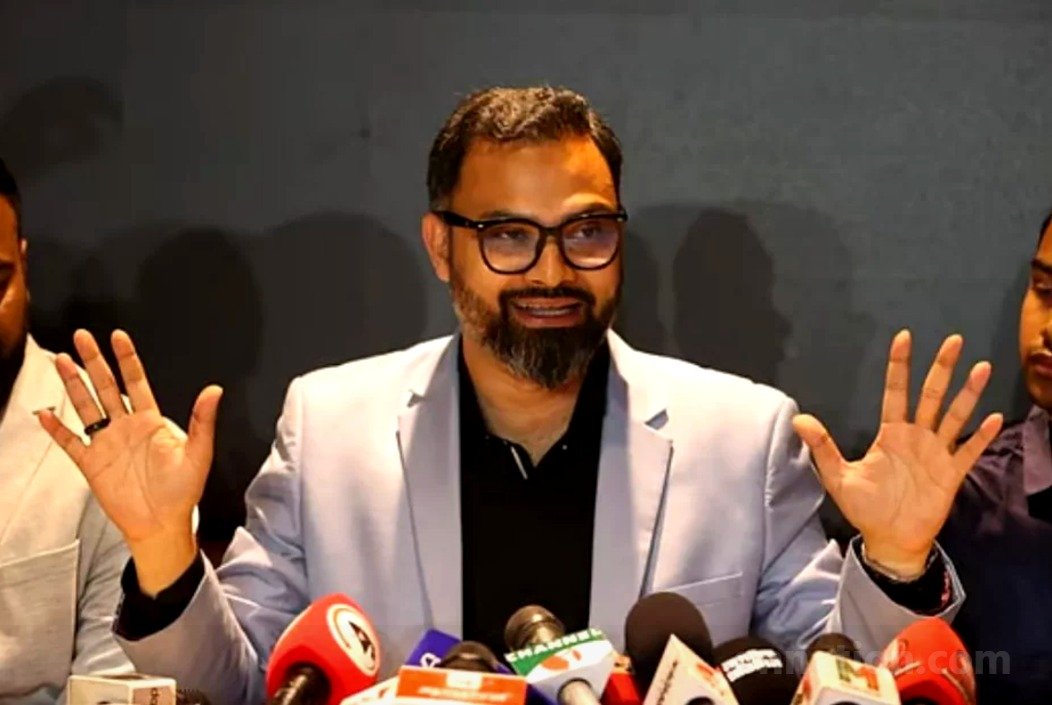
New Minister, Old Crisis, watching a nation. Aminul Haque’s inauguration ceremony as Bangladesh’s State Minister for Youth and Sports coincided with one of the hottest political issues surrounding athletics in this country today. By nightfall, at his residence in Mirpur, Dhaka, however, the former national football captain had turned out to be fielding questions not on soccer but about Bangladesh cricket’s two most popular and most embattled figures: Shakib Al Hasan and Mashrafe Bin Mortaza. Where Shakib and Mashrafe are concerned, their absence from public life and the cricket field has, for a long time, cast a pall over the whole Bangladeshi sports scene. Now, the new minister is also suggesting something more light-hearted in approach.
“Flexibility & Tolerance”
Since the student and public uprising of August 5, 2024, Shakib, who is an MP from Awami League, has not been able to return to the country. Also, an ex-MP, Mashrafe, has been away from public view for 1.5 years. Both former captains face multiple legal cases on charges of crime and other serious offences. Yet, Aminul stressed a reconciliatory tone.
Quote box
“I also want to resolve the cases quickly against them so that Shakib and Mashrafe may return to Bangladesh cricket. We intend to handle this matter with flexibility and tolerance.”
– Aminul Haque, State Minister for Youth & Sports. It is said that both players have murder charges on them. Shakib in particular is said to be facing corruption-related charges as well. The Bangladesh Cricket Board (BCB) has initiated efforts to facilitate Shakib’s return. Aminul emphasised that reconciliation must be made at the state level.
“We hope that the lawsuits will be brought to a conclusion at the national level and that he can speedily come back to Bangladesh.”
Is it just a dream for critics to become collaborators?
Curiously, Aminul himself has had a troubled relationship with the authorities.
Aminul Islam, former national skipper of Bangladesh, was elected president of the Bangladesh Cricket Board in the October elections; at the time, he openly contested the propriety of that electoral process.
But power changes people’s positions.
As a state minister charged with carrying out the policy, he looks to cooperate but still keeps a watchful eye on criticism.
“I said at the time, and I still say, that the cricket board election was highly dubious. But as I have now assumed a position of responsibility, I will sit down with them and, through dialogue, find whether we can advance to a better point.”
He also noted that any future steps will conform to ICC regulations, demonstrating a grasp of multinational governing frameworks and the scrutiny they may entail.
Viewing the Whole: Sports, Politics & National Identity
Cricket has deep national significance beyond mere sport. It is currency of the heart, collective pride and often a reflection on national politics.
Might Shakib’s and Mashrafe’s comeback not merely suppose the return of two cricketers, but that by proper law enforcement, elegant means to maintain justice and the balance between sporting tradition and fair play are found?
Aminul’s terms “flexible”, “tolerant”, and “discussion” at least set a gentle tone in a tense political climate. Whether it stands for real progress or careful stage management is another matter.
The country now waits.
Too many chefs spoil the broth.
At The Bengali Roots, we are aware that sport in Bangladesh is hardly a self-contained domain but is bound by politics, like any other sector of modern society. This article is based on statements by the Minister of State for Youth and Sports and current happenings involving Shakib Al Hasan and Mashrafe Bin Mortaza.
All life-changing events are subject to due process. My goal is to provide a balanced account of emerging policy positions while contributing to the broader conversation about governance, accountability issues, and what lies ahead for Bangladeshi cricket.


