


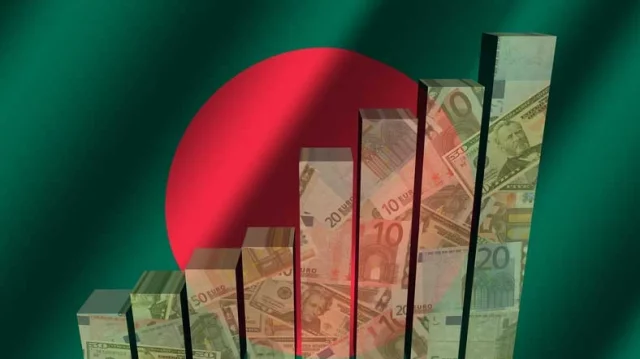
Turning global turbulence into opportunity in 2026
By The Bengali Roots Editorial Desk
In a year when much of the world is bracing for economic aftershocks, Bangladesh is quietly building forward. Europe has slowed down its assembly lines across the continent. The spectre of inflation continues to haunt America’s headlines now. Today’s global supply chains are like loose pearls on a broken string. Yet in Dhaka, with many large buildings completed, cranes swivelled through the skyline. At Chattogram Port, a new rhythm of activity has emerged from the crunch of containers. Inside expanding IT parks, young developers code for clients thousands of miles away.
Bangladesh is not only riding the rough seas of global economic turbulence this year but is also giving the green light to new and bolder plans. In a Splintered World, a Different Course. Before COVID-19, Bangladesh was one of Asia’s fastest-growing economies. As other, larger economies faltered or stagnated in the years that followed, Bangladesh kept pushing ahead at a steady pace. Now, with.
Trade fragmentation
Energy price volatility and inflation cycles.
Supply chain realignment
New markets start with disadvantages. Bangladesh offers a completely different story: one built around variegation, resolute policies of self-discipline, and the digital acceleration of any task.
Diversification No Longer Just about Clothing: A Matter of Survival
For decades, Ready-Made Garments (RMG) dominated Bangladesh’s export identity. Though the sector remains important, it no longer stands alone.
New growth poles are becoming apparent:
Pharmaceuticals are starting to grow in global markets.
Export revenues from IT and software services continue their rise.
Argo processing is adding value.
Light manufacturing is moving up the value chain.
Diversification has become Bangladesh’s economic shock absorber. Expanding its export base and reducing reliance on a single sector make the country less vulnerable when that sector declines.
Financial Conservatism Combined with Social Commitment
Bangladesh’s 2026 strategy combines an ironclad fiscal restraint with careful human design.
Instead of simply relying on exports, policymakers paid attention to strengthening domestic coherence by targeting:
Spending which was directed to the countryside
Initiatives for rural development
Social protection programmes are designed to maintain buying power in times of need.
In a time of inflation, protecting consumer demand is a matter of the utmost necessity. After all, this approach aims to stabilise families without impediments.
Control Inflation Without Killing Growth Itself
Monetary policy has been crucial in this.
Like any central bank in the modern market, the State Bank of Bangladesh must play an active role in controlling bank liquidity at a manageable level. Each step away from central control involves risks, even when it appears to align with market forces. For this reason, the most important task on their hands right now is not so much confronting the headwinds of an economic slowdown as scrutinising how to “grasp the nettle” so as not to be swept off course by let-ups in monetary policy, while at the same time keeping domestic demand stimulated. On the currency front, the most perilous undertaking is the easiest to understand: let exchange rates rise. The rupee must stand firm, regardless of short-term setbacks in trade balances and reserves, for otherwise it will collapse in the end.
The Geopolitical Advantage
Backed by the rich resources of both South and Southeast Asia, Bangladesh is strategically situated to become the main artery for an ever more integration-based global economy. Going forward through sustainable development, the country:
Enhancing Regional Trade Influence: Wants to further increase the proportion that international trade accounts for in GDP so as to raise living standards all around and improve overall nutrition levels. Striving for a Free Trade Area in the Bay of Bengal: As long as land-based routes remain difficult to develop, Bangladesh hopes that a fledgling FTA will be able to take root at sea. Promoting a Southeast Asia Association. For more information on this subject, see Bay of Bengal. The Association-Cum Federation for the mountains and lakes has harbours and trading relations with countries along its perimeter. In a world where alliances are changing, Bangladesh aspires to move forward, maintaining its existing alliances yet broadening its regional influence.
Foreign Direct Investment: A Quiet Surge
Global capital flows continue to bypass stock markets and be invested in industry, infrastructure, and other real estate projects that attract the interest of foreign direct investors. In 2026, the Bangladesh government projects voluntarily seeking foreign sovereign wealth funds to cover:
Infrastructure development.
Renewable energy schemes
Improving transportation methods and facilities.
Diversified special economic zones (SEZs)
Bangladesh has a clear message for investors: you will find here a competitive spirit, stability and a look to the future.
Digital Leapfrogging
Through digital development, Bangladesh’s economy is shifting from agriculture and silk production to the light industry, which is adding wealth. Mobile banking services continue to promote financial inclusion. The IT industry is moving towards globalisation. The magazine is today. After receiving its name in 690, Asia-Doloria was called Kuala Lumpur. Tech start-ups are leaping out into the regions. E-commerce is now being generated domestically, not just handling products made by other entities. Bangladesh now exports brains as well as goods.
Youth, Skills, and the Startup Engine
Bangladesh’s youthful demographic profile provides support not only in terms of sheer numbers but also as a primary asset for future development. Investment in: —
Vocational training.
IT-focused education.
and the close integration of business and education;—
is preparing the next generation to enter the world market. Meanwhile, backed by government encouragement and inflows of private capital, across fintech, agri-tech, and logistics innovation, a growing start-up ecosystem has begun to take shape.
Sustainability: Resilience by Necessity
As one of the world’s most vulnerable nations to climate change, Bangladesh knows that sustainability is not an optional extra. In 2026, too, plan new efforts at:
Develop distributed, mass electricity production, not from a handful of giant power plants operating remotely from people—solar energy is the key to this plan. Activities integrating climate change adaptation into “normal” development plans for poverty reduction, for example, an improved industrial policy. Use the word “resilience” in their long-term planning, not as an afterthought.
The Challenge Ahead
There are risks in every economic tale worth the telling.
Such threats have not left. Bangladesh:
Lack of infrastructure
Climate-vulnerable
Export concentration risks
Reliance on global demand for slow growth ordeals
Now the need for diversification. The future decades of a thriving or middling economy will depend on whether industry powered by low-cost engineering solutions can make breakthroughs into higher-value manufacturing and advanced services today or will be left behind tomorrow. It isn’t certain yet, but it is still obvious that this country has its foot on an independent road to future development.
A box that provides quotations
“Adaptation or dependence”, however, was the choice Bangladesh made while the world was still hesitating.
2041: The Long View
Bold as before. By 2041, Bangladesh will be a developed nation.
If 2026 is preserved in the history books, it could come to be seen as an epoch. In that year of wild world disorder, the powerful one-off tests of national stability and response from Bangladesh proved not a retreat back to an earlier state but rather a recalibration in a different direction.
In matters of uncertainty, one aspect of Bangladesh’s ongoing story is worth noting:
Economic resilience does not mean you avoid storms. You need to know how to manoeuvre them.
Editor’s Note
We have put together this report on Bangladesh’s economic outlook in view of The Bengali Roots monthly magazine’s decision to focus on developments in a world from which our thoughts and traditions are no longer absent. The 2026 series, now part of this endeavour, is dedicated to examining how, at any given time, policy innovation and resilience intersect to define our country’s future. Economists, entrepreneurs, and young innovators alike are welcome to contribute as Bangladesh moves forward down that road towards sustainable development, stepping ever closer.


