


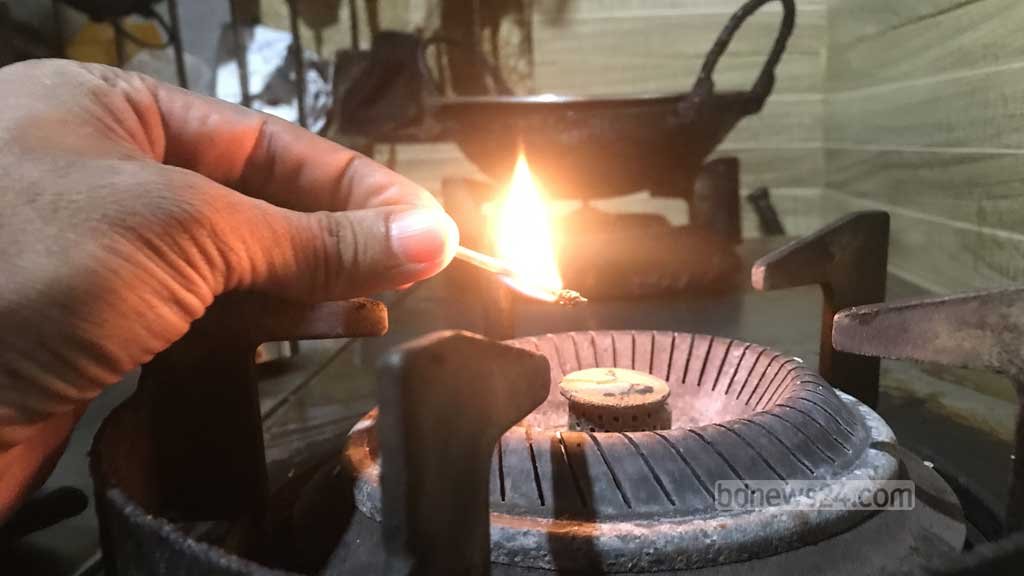
Why LPG was only the beginning
By Sham Islam | The Bengali Roots
Think of a kitchen without gas, a factory floor without noise, and quiet capital cities because they can make no sounds at all.
The present isn’t a dystopian projection for many millions in Bangladesh; it’s a weekly occurrence.
Recent newspaper headlines have focused on LPG shortages and price spikes, which
resulted in prices almost reaching BDT 2000 per cylinder. But it is really just the empty gas cylinder that indicates the problem. Below, peripheral problems like these lie a deeper root problem, a slow-burning energy crisis over decades.
High fuel costs—and not just any high fuel cost. Yet the commerce of goods has stopped. At the same time, woes are mounting as always, only making our future dimmer with uncertainty.
From Cheap Gas to Expensive Imports
For many years, Bangladesh relied on homegrown gas that was both affordable and politically convenient. Those days, however, are numbered.
Production from the country’s old gas fields is expected to fall steeply, by some estimates as early as 2025, according to the EIA’s gas production statistics. Rather than decisively turning towards renewable energy, Bangladesh turned to importing LNG. The same with oil and coal bought on a dollar-trading market, which are volatile sources.
By mid-2025, projections are that almost two-thirds of Bangladesh’s energy production will come from imported fossil fuels. If the Taka falls or prices jump in international trade markets, local utility prices will follow along.
What was once a “silent” crisis can no longer be stifled.
Gridlock: When There Is No Power
This is the tragedy of a country: it generates electricity and feeds off the national grid. But that’s not even optimisation for power supply since the Dhaka ring’s transmission lines must be finally strung, and everything else right from here connected in.
On the other hand, the national grid is running near capacity now. Losses in the system exceed 10%, nearly double the world average.
This bottleneck is not only a nuclear issue. Solar and wind projects are standing still in part because of grid-tie requirements. In the green revolution plans, where the transmission system cannot bring variable renewable sources into the system, all is still pie in the sky.
The “Renewable Revolution” risks becoming a slogan and not a system.
The Economic Quake
Energy uncertainty is more than an academic policy debate. It is reshaping Bangladesh’s industry.
Energy shortages have disrupted textile production, an area in which Bangladesh earns the majority of its foreign exchange. In addition, small and medium-sized enterprises that depend on oil- and gas-fired backup facilities pay more than BDT 25 per kWh, shattering already thin margins.
Factories slow down. Investors shy away. Competition declines.
For a nation looking to attain middle-income status by 2031, the energy gap not only brings darkness into homes but also multiplies risks.
“We aren’t just losing electricity; we’re losing our competitive edge.
If we can’t ensure energy, we can’t assure jobs.
The ‘Silent Crisis’ is so loud it’s drowning out our industrial future.”
— Summarised from reports 2026 Industry
Why the Renewable Push faltered
Bangladesh’s Renewable Energy Policy 2025 sets a target of 20% renewable energy by 2030. In theory, this is an ambitious target, but on the ground, conditions have yet to catch up.
Three structural obstacles are particularly obvious:
Networks are Ageing.
Without a modern “smart grid” to smooth the variability of solar and wind power, you can’t make renewables work.
Scale your roof off.
Factories and commercial buildings have the potential for unlimited roofing areas, but component taxes, regulations, and other aspects of the business climate are hampering their expansion.
Dispersed Policy
Short-term “make do” methods have traditionally given way to quick fixes at the expense of longer-term fundamental change.
The last two national budget reports have seen the largest number of newly opened coal power plants at the lowest laggard pace. It tallies a staggering 190 GW of capacity, with 79 more under construction and a further 80 planned.
In a country so dependent on agriculture for its livelihood, coal’s unhealthy development should be poured into the sea: In the past two decades alone, we have achieved food security.
Two years on, the situation remains dire. But does that mean all is, quote-unquote, in vain here? Actually, no, because the answer also depends on who you ask about the fact that local authorities were never consulted. And this isn’t just at home: as of October 2008, there were still over 200 municipal governments competing for a share of billion-dollar aid programmes coordinated by the central government.
The above details can be found by joining or leaving different Yellow Pages telephone book network sites (http://yellowpages.com). Users are encouraged to use an information structure that allows the right connections.


