


The Bengali Roots Editorial Desk
The ink had barely dried on Bangladesh’s much-discussed trade agreement with the United States when the legal foundation beneath it began to crumble.
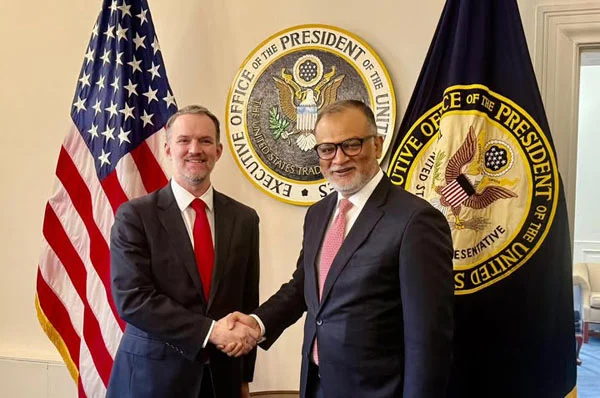
Signed in the final days of the interim government, the agreement was presented as a strategic move to reduce the burden of US “reciprocal tariffs”. But last Friday, when the US Supreme Court declared those reciprocal tariffs illegal, the very premise of the deal came under renewed scrutiny.
What was meant to be a diplomatic achievement may now stand as a cautionary tale.
A Deal Tilted from the Start?
From the outset, economists and trade researchers questioned whether the agreement truly served Bangladesh’s interests. A closer look at trade data suggests that the balance of benefits leaned heavily toward Washington.
Under the agreement:
- Bangladesh would grant tariff concessions on 6,710 US products.
- The United States would offer tariff-free benefits on 1,638 Bangladeshi products.
On paper, the numbers appeared substantial. In practice, the picture was very different.
According to 2025 import–export data from the National Board of Revenue (NBR):
- Of the 6,710 US products listed for tariff concessions, Bangladesh imported 2,016 products last year.
- The total import value of these products was approximately $65 million.
- If tariffs had been gradually reduced or eliminated, Bangladesh’s revenue loss could have reached Tk 4.19 billion.
By contrast, Bangladesh’s export gains were minimal:
- Of the 1,638 products eligible for US tariff benefits, only 14 products were actually exported to the US last year.
- Their total export value was about $670,000.
- The US government’s foregone revenue would have been roughly $125,000 (around Tk 15 million).
The imbalance is striking.
The Supreme Court Shock
The situation shifted dramatically when the US Supreme Court declared reciprocal tariffs illegal. In response, former President Donald Trump announced a new 15% tariff framework.
This development further reduced Bangladesh’s potential gains:
- The projected US revenue loss would drop to about $100,000 (Tk 12.3 million).
- Bangladesh’s expected trade advantage would shrink even further.
In effect, the core incentive behind the agreement has been legally dismantled.
The Missed Opportunity: A Single Product That Mattered
Beyond ready-made garments (RMG), one of Bangladesh’s key export categories to the US is “Hat and Other Headgear”.
Last year:
- Exports in this category reached $25 million.
If meaningful tariff benefits had applied to this single category, Bangladesh could have gained approximately 370 times more than the combined benefit of all 1,638 listed products under the agreement.
The structure of the deal, critics argue, did not adequately prioritise Bangladesh’s strongest export sectors.
Quote Box
“Even before the trade agreement with the United States comes into effect, a court has declared the reciprocal tariff illegal. As a result, the agreement’s significance has largely diminished.” Mustafizur Rahman, Distinguished Fellow, Centre for Policy Dialogue (CPD)
Rahman also warned that the US retains the authority to impose additional country-specific or product-specific tariffs, an area Bangladesh must monitor carefully.
Political Claims vs. Economic Reality
At a press conference on 10 February, the former commerce adviser to the interim government described two major achievements:
- The reciprocal tariff rate had been reduced from 20% to 19%.
- Tariffs on ready-made garments produced from US cotton would be zero.
However, with the reciprocal tariff framework now annulled, both achievements have become uncertain.
The political narrative of success is colliding with the legal and economic reality.
What Happens Next?
As of Saturday, the US Trade Representative (USTR) website lists eight “reciprocal trade” agreements, including Bangladesh.
But uncertainty looms.
Commerce Secretary Mahbubur Rahman told Prothom Alo that the bilateral trade agreement might be cancelled, though clarity is expected after 24 February.
If the agreement is withdrawn or fundamentally altered, Bangladesh may need to reassess its broader trade strategy with the United States.
The Bigger Picture
The overall trade equation appears stark:
- Bangladesh’s potential revenue loss: Tk 4.19 billion
- US projected revenue loss: Tk 12–15 million
- Export coverage for Bangladesh: minimal
- Legal foundation of the agreement: compromised
For many analysts, the episode underscores the importance of data-driven negotiation, sector prioritisation, and legal foresight in international trade diplomacy.
A deal built on shifting legal ground rarely stands firm.
Editor’s Note
Trade agreements are often framed as diplomatic victories. Yet, as this case illustrates, numbers matter more than headlines. The Bangladesh–US reciprocal tariff agreement reveals how asymmetries in trade structure, export concentration, and policy timing can significantly influence outcomes.
As Bangladesh deepens its global economic engagement, transparent analysis and public scrutiny will remain essential to ensuring that future agreements genuinely advance national interests rather than serve as symbolic diplomacy.


