


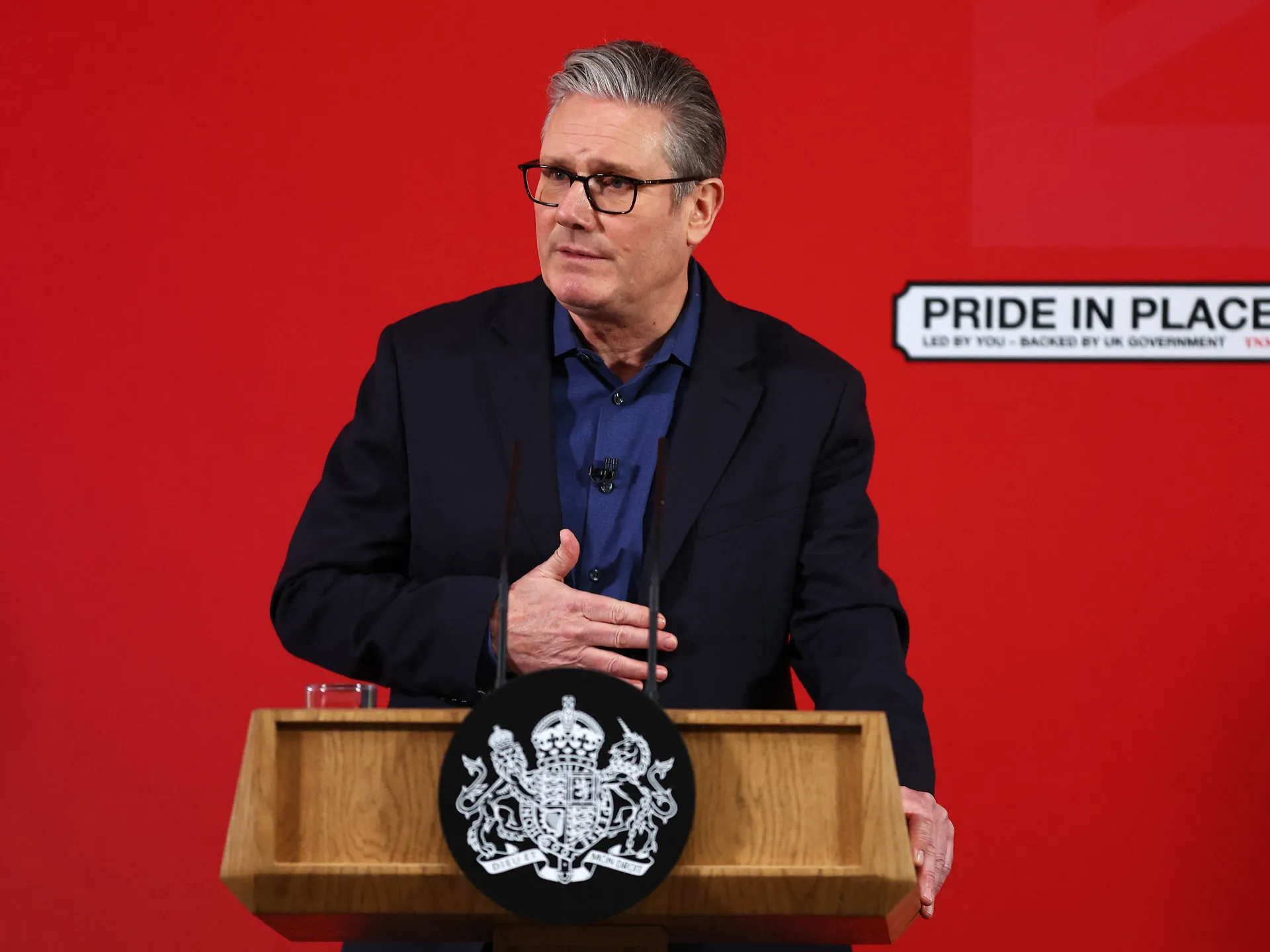
Starmer apologises to Epstein victims as Mandelson scandal engulfs labour
By The Bengali Roots Political Desk
In a moment that may come to define his premiership, UK Prime Minister Keir Starmer stood before the nation and uttered two words rarely heard in modern politics: “I am sorry.”
But the apology was not addressed to Parliament, nor to his party; it was directed to the victims of disgraced financier Jeffrey Epstein.
The reason: Starmer’s appointment and subsequent dismissal of veteran Labour figure Peter Mandelson as UK ambassador to Washington, despite Mandelson’s documented ties to Epstein.
What began as a political miscalculation has now escalated into a full-blown crisis threatening Starmer’s authority, party unity, and potentially his premiership.
The Apology That Shook Westminster
“I am sorry,” Starmer said in an impassioned address, acknowledging that Epstein’s victims “have seen accountability delayed and too often denied.”
He continued:
“Sorry for what was done to you, sorry that so many people with power failed you, sorry for having believed Mandelson’s lies and appointed him.”
The apology followed days of mounting pressure after newly released files revealed warm email exchanges, financial dealings, private photographs, and evidence that Mandelson shared confidential and potentially market-sensitive information with Epstein nearly two decades ago.
Starmer insisted he had not known the “depth and darkness” of Mandelson’s relationship with Epstein when appointing him as US ambassador last February.
Yet the admission that he was aware the relationship had continued even after Epstein’s 2008 conviction for soliciting a minor has left many Labour MPs deeply uneasy.
A Party in Revolt
The anger inside the governing Labour Party is palpable.
Labour MP Karl Turner described the mood in Parliament as the most furious he had witnessed in 16 years.
“We can’t pretend that this is not a crisis situation.”
MPs forced the government to submit all appointment-related documents to Parliament’s Intelligence and Security Committee, bypassing ministerial discretion, a rare and telling rebuke.
Opposition leader Kemi Badenoch declared Starmer’s position “clearly untenable”, suggesting it is “a question of when, not if, he goes.”
Despite the storm, Starmer has refused to resign.
“I intend to go on doing that vital work,” he said, outlining his government’s priorities in an attempt to project stability.
Mandelson’s Fall Again
For decades, Mandelson was one of Labour’s most powerful and controversial figures. A former UK minister and EU trade commissioner, he had twice resigned from government posts amid allegations of misconduct.
Appointed ambassador to Washington in February, he was dismissed in September after only seven months in the role.
This week, he resigned from the House of Lords amid renewed scrutiny and now faces a police investigation over alleged misconduct in public office, an inquiry that could carry criminal consequences.
Mandelson, 72, has yet to publicly comment on the latest revelations.
Political and Economic Fallout
The scandal comes at a politically perilous time:
- A crucial by-election looms this month.
- Local elections are scheduled for May.
- Labour, which returned to power in 2024 after 14 years in opposition, is already predicted to suffer losses.
The financial markets have also reacted. The pound weakened, and long-term government bond yields rose as investors digested the uncertainty.
Luke Tryl of the More in Common UK think tank observed:
“Repeated government U-turns, cabinet resignations and constant briefings of leadership plots have led the public to say this government is just as chaotic as the last. The Mandelson saga looks set to turbo-charge that even further.”
For many voters who backed Labour as a promise of stability after years of Conservative turmoil, the optics are damaging.
What Happens Next?
Starmer’s immediate survival may depend less on the opposition, where Labour still holds a comfortable parliamentary majority, and more on his own party.
Calls are growing for the dismissal of his chief of staff, Morgan McSweeney, reportedly a strong advocate for Mandelson’s appointment. Starmer has publicly defended him.
The deeper question remains: was this an error of judgement or a failure of due diligence at the heart of government?
Either way, the apology has not ended the crisis. It may have only marked its beginning.
▣ Quote Box
“Sorry for having believed Mandelson’s lies and appointed him.” Keir Starmer, UK Prime Minister
Editor’s Note
This crisis underscores a broader theme shaping contemporary British politics: accountability versus political survival. For readers in South Asia and beyond, particularly in Bangladesh, where institutional trust remains a critical public issue, the unfolding events in Westminster offer a stark reminder that democratic leadership hinges not only on policy competence but on moral judgement.
Whether Starmer’s apology represents genuine accountability or political damage control will be decided not in speeches, but in Parliament, at the ballot box, and in public trust.


