


By The Bengali Roots Monthly Magazine
A Nation Still in Mourning
Seventeen years after the gunshots fell silent at Pilkhana, the echoes of February 2009 continue to reverberate across Bangladesh’s political and military landscape.
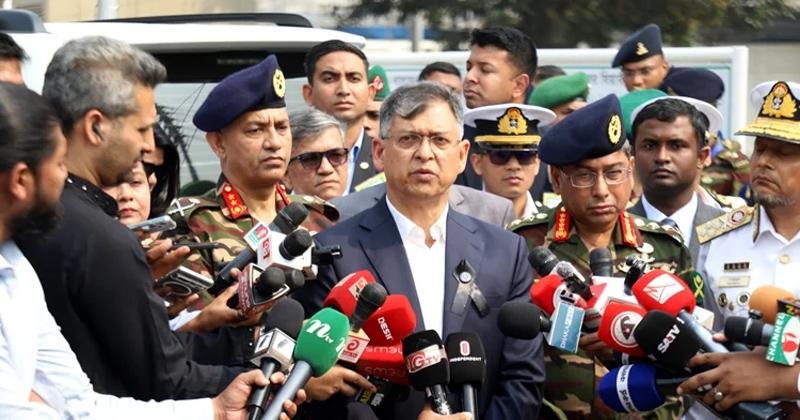
Standing before rows of white headstones at the Banani Military Graveyard, Home Minister Salahuddin Ahmed delivered a firm message: there will be no new probe commission into the Pilkhana carnage, but justice, he said, will not be compromised.
The remarks were made on National Martyred Army Day, marking the anniversary of one of the darkest chapters in Bangladesh’s history.
The Pledge: Justice, Not Repetition
Addressing journalists after laying wreaths, the minister described the 2009 killings as a deliberate attempt to weaken the Bangladesh Army and destabilise the country.
“I am assuring the nation and the martyrs’ families of ensuring justice.”
Salahuddin Ahmed, Home Minister
He stressed that the government remains committed to preventing any recurrence of such a tragedy.
The events of 25–26 February 2009 unfolded at the headquarters of the then Bangladesh Rifles (BDR) in Pilkhana, Dhaka. In a 33-hour mutiny, 74 people were killed, including 57 army officers, the BDR director general and his wife, two other officers’ wives, and 15 civilians. It was an unprecedented internal assault on the nation’s military leadership.
No New Commission: A Course Correction
In a notable clarification, the Home Minister corrected an earlier statement suggesting that a fresh investigative commission might be formed.
Instead, the government will implement the recommendations of a national independent commission established by the immediate past interim administration to re-examine the incident.
“I made a remark earlier that we would form a commission to reinvestigate the BDR carnage without going through the report of the national independent commission. Now I am correcting myself; we will not form any new commission,” he said.
The commission, comprised of experienced and competent individuals, has reportedly submitted 70 recommendations. These will be implemented in phases, according to the minister.
Salahuddin Ahmed, also a standing committee member of the Bangladesh Nationalist Party (BNP), emphasised that the findings of the interim government’s commission would be given due importance.
The Legal Process Continues
Beyond policy decisions, the judicial process remains ongoing. Several appeals related to the Pilkhana cases are currently pending before the Appellate Division.
“The judicial process will be completed,” the minister affirmed, a reminder that the concluding chapter in the legal battle has yet to be written.
A Crime Against Sovereignty?
In his remarks, Salahuddin framed the carnage not merely as a mutiny, but as an assault on the very foundations of Bangladesh’s independence and sovereignty.
“They aimed to undermine the Bangladesh Army and weaken the country. Those who do not believe in Bangladesh’s independence and sovereignty could have harboured such intentions,” he said.
His statement situates the tragedy within a broader political narrative, one that continues to shape national discourse nearly two decades later.
Why It Still Matters
The Pilkhana carnage remains one of the most devastating internal security crises in Bangladesh’s post-independence history. For many families, it is not a political event it is a personal loss that has defined generations.
As wreaths were laid and prayers were offered, the country was reminded that justice is not merely a legal outcome, but a national obligation.
Editor’s Note
The Pilkhana tragedy is not only a historical event but a living memory in Bangladesh’s collective consciousness. As debates over accountability, sovereignty, and institutional reform continue, The Bengali Roots remains committed to presenting informed, balanced coverage that honours the victims while examining the political realities shaping the present.
Justice, as promised, must be measured not only in verdicts but in transparency, institutional strength, and national unity.


