


Boisabi, reawakening of indigenous entrepreneurship
The Bengali Roots Editorial Desk | March 2026
In the winding paths and twists of the Chittagong Hill Tracts (CHT), there is more than just the heady scent of wildflowers to carry on a sweeping breath of late Chaitra. It brings the rhythmic pulse of hills.
What this link offers, of course, is a complex and ongoing history shaped by centuries of struggle rather than celebration. Yet, like the spring equinox moving farther north toward the Land of Promise, rising from its slumber once again, it looks as if historical dynamics might yet tip, during our lives, onto a different trajectory.
This year’s Baisabi took an important first step in this direction with the inauguration of a five-day festival at Mahajan Para, Khagrachari, on the grounds of the Surya Shikha Club, which featured a plethora of other events over the days and soon blossomed into economic opportunities.
Bordering on the Field of Blood, organised by the “Khagrachari Egattur Women Entrepreneurs,” these fairs unite community tradition and the way of doing business. Burgeons Hill Tracts—seeking to become a must-concern now, not just for simple rituals but also in terms of how they leverage unique local handicrafts.
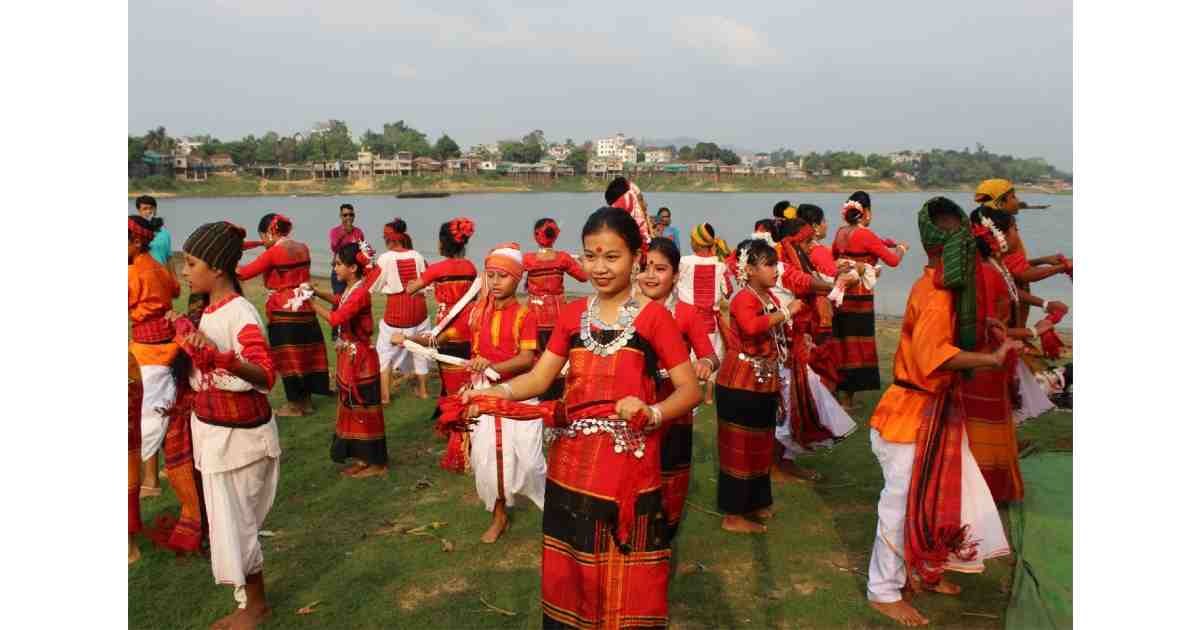
Visitors at the fair. The festive sense of happiness flows to meet the eye as soon as tens of stalls are covered in pinon-hadi, the two-piece attire (either a sarong with a matching top or pants with a blouse of the same length) of Chakma girls, and tiny silver necklaces that tell stories from our hills.
The fair itself is a multi-sensory journey into Piney CHT, where all these elements, in perfect harmony, make life buzz with joy and good fortune. Pajan, an unforgettable vegetable blend made with 20–30 ingredients, believed to have significant economic and medicinal potential, is a must for any festival.
The arrival of the Bengali month of Chaitra traditionally signals the festive atmosphere of Baisabi. These fairs do more than just sell products; they celebrate the resilience of our cultural identity and the initiative of our local women who are taking charge of our economic future.” Shefalika Tripura, Chairman, Khagrachari Hill District Council.
Empowering the Western Hills
The fair’s main focus. It is needful to suggest that the convener of the organising committee, Kongkana Chakma, is x in Varpun for local women with limited access to established markets.
By bringing together all under one roof, national costumes, make-up and indigenous cuisine supplies, the show seizes seasonal demand and ensures that the proceeds go back into the home community’s pocket.
Encouraging such a development is part of the duty not only of our compatriots living in communities abroad but also of those around us. Despite Bangladesh being a basket case, the initial seed sown helped to spur May Fair into being. According to March 24, (36) Bay has lost nothing of its racial or progressive vigour. This fact is indicative of the wisdom of the summit between new looks and tradition, marching forward hand in hand.
Editor’s Note: Baisabi is a movement of the plaited distribution process in Bengal, the Hill Tracts of the borderland, while the international calendar says ‘New Year’, globalised ranges still remain emblematically veracious natural places in the human lifespan.
We believe at “The Bengali Roots” that the customs of Baisabi are essential knowledge for the modern Bengali, who should have a comprehensive natural relationship with their country. For their leadership, we commend the Khagrachari Egattur Women Entrepreneurs.
What they are producing is not only a living memorial to the Spirit of “Baisabi” but also hope for the future. We encourage our readers abroad to explore and sustain these indigenous arts, whose true and unadorned beauty IS the Tract Little Hills, Chittagong.


