


How global funding cuts are strangling Rohingya hope
By: SHAM ISLAM, for The Bengali Roots.
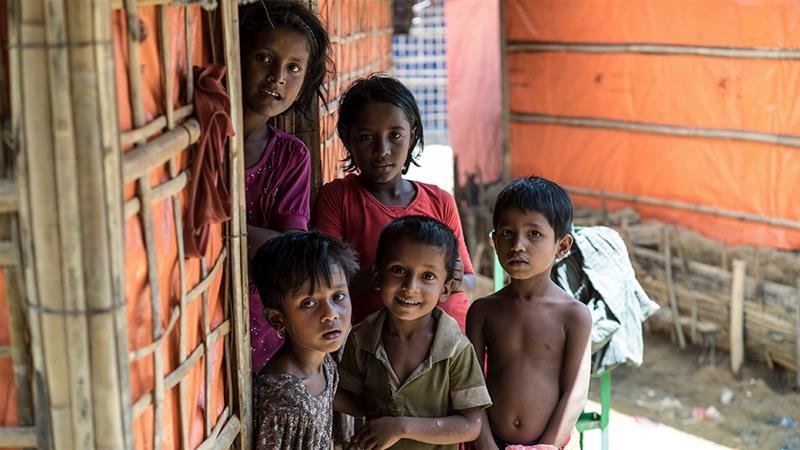
Imagine a city of nearly a million people, built on fragile hillsides. Now imagine that city’s vital organs, its hospitals, and its schools are being slowly starved, not by shells or snipers, but by global neglect. This is the “quiet catastrophe” currently unfolding in the Rohingya refugee camps of Cox’s Bazar. While the world’s attention fractures amid new geopolitical fires, the international community is, in effect, pulling the plug on a population with nowhere else to go.
The Anatomy of Neglect
It has been over six years since the brutal military crackdown in Myanmar’s Rakhine State forced nearly 750,000 Rohingya to flee for their lives. Today, they inhabit the world’s largest refugee settlement. This humanitarian emergency was initially met with a surge of global solidarity, but as the crisis enters its seventh year, that empathy is evaporating.
The 2023 Joint Response Plan (JRP), the UN-coordinated blueprint for survival, was critically underfunded. This isn’t just a line item on a spreadsheet; it has set off a domino effect of service cuts impacting every facet of life for a stateless and traumatised population.
Healthcare: A Powder Keg of Disease
The Rohingya in Cox’s Bazar are entirely dependent on aid. Their legal status prevents them from working or travelling, creating a controlled environment where essentials must be imported. For years, this ecosystem, funded primarily by Western nations, prevented the worst outcomes. Now, the landscape has shifted. The war in Ukraine and global economic instability have pushed the Rohingya down the priority list.
The consequences in healthcare are immediate and terrifying:
- Facility Closures: Major providers like Médecins Sans Frontières (MSF) have been forced to hand over or shut down health posts.
- Maternal Mortality: With fewer skilled birth attendants and reduced emergency referrals, we are projecting a sharp increase in preventable deaths for mothers and infants.
- Epidemic Risk: In a settlement with high density and poor sanitation, cutting vaccination programmes creates a powder keg for cholera, measles, and diphtheria.
“The international community is practically telling the Rohingya that they have been forgotten. The funding cuts aren’t abstract figures; they mean children aren’t getting vaccinated and aren’t learning. We are creating a vacuum, and history tells us exactly what fills that void when hope is removed. This isn’t just a humanitarian failure; it’s a failure of global security foresight.”
Representative from a Major International NGO (Speaking on condition of anonymity)
Education: Closing the Door on the Future
If healthcare is about immediate survival, education is the only shield against a “lost generation”. For a community historically denied schooling in Myanmar, the camp learning centres were a hard-won victory.
Today, hundreds of these centres have closed. Teacher salaries are being slashed, leading to an exodus of trained educators. This is a strategic disaster. Stripping children of a school routine leaves them vulnerable to child labour, early marriage, and radicalisation. We aren’t just closing classrooms; we are closing the only nonviolent path to a future in which this community can rebuild itself.
The Security Implication: A Regional Threat
This is not merely a tragedy “over there”. The destabilisation of the camps poses a direct threat to regional security. Desperation breeds opportunity for organised crime and human trafficking. We are already seeing a rise in gang activity and a spike in dangerous boat departures to Malaysia.
The “global fatigue” driving these cuts is directly undermining the long-term stability of Bangladesh and the wider Southeast Asian region. If we accept that an entire ethnic group can be “warehoused” and then slowly strangled of basic rights, we must interrogate the integrity of the international system itself.
A Call for Accountability
The quiet catastrophe in Cox’s Bazar is not an inevitable tragedy; it is the consequence of political choices. “Donor fatigue” is a luxury that nearly one million stateless people cannot afford. We must ask: Is there truly a lack of resources, or simply a lack of will?
The time for empty statements of concern has passed. What is needed is a re-commitment to funding and a recognition that the cost of neglect, measured in regional instability and lost lives, will be far higher than the cost of action.
Editor’s Note
- Factual Basis: This analysis is based on 2023–2024 reports from the UN, Human Rights Watch, MSF, and the Refugee, Relief and Repatriation Commissioner (RRRC) of Bangladesh. The central fact that the Joint Response Plan (JRP) faces significant funding shortfalls is the cornerstone of this piece.
- A Note on Tone: This article adopts an analytical and critical tone, reflecting the urgency reported by field organisations. This “accountability journalism” aims to interrogate the root causes of policy decisions.
- The Nature of Anonymity: Quotes from NGO workers are often granted anonymously due to sensitivities with donor governments and the host government regarding camp access.
- Data as a Proxy: When we analyse statistics like “50% funded”, we translate that data into human consequences: fewer vaccines, fewer meals, and fewer open schools to reflect the ground reality.


