


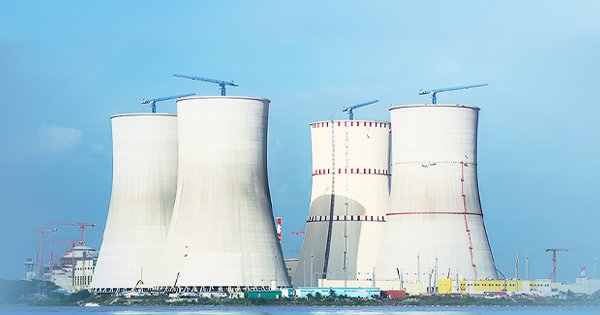
Sovereignty or Debt Trap? Interrogating the $12.65 Billion Anchor of a Nation’s Energy Future
By The Bengali Roots Editorial Desk | February 2026
Ishwari, a bend in the Padma River, is now the potential fulcrum of Bangladesh’s future.
After the loading of fuel is completed for the first reactor at Roppur, the country isn’t simply adding a few more megawatts to an ageing national grid; it’s joining the elite circle of nuclear-armed states. As the only 1,200-megawatt system connected so far enters operation, Bangladesh will be one of more than three dozen states that can harness atomic power to produce electricity.
But behind the symbolism stands a tougher question: before us is this $12.65 billion Russian-engineered colossus, a final key to energy sovereignty or a growing chain around our necks of foreign debt?
This is the story of Bangladesh’s nuclear gamble.
Born in the nuclear age, Bangladesh has, for decades, lived on the rough side of imported energy. Liquid natural gas cargoes arriving, coal coming in and out of favour with international markets – public purse strings stretching; lights going out is our story.
Rooppur offers the chance to end this vicious circle.
Nuclear energy is also a so-called baseload electricity. Regardless of the weather or what the clock says, it provides constant and reliable power, unlike solar panels, which go to sleep when night falls, or wind turbines that rely on seasonal winds. Once operating at full capacity, both units will together produce 2400 MW. high-quality electric power, equivalent to about 15% of total national demand.
This transformation now moves Bangladesh from an energy-starved state to a mature player with technological sophistication. The mental leap is nearly as important as the physical one: Bangladesh has joined the world’s nuclear club.
The Technical Backbone: Engineering the Atom. At the heart of the project lies VVER-1200, a third-generation design from Rosatom. It is not Cold War technology. The plant features:
Systems of passive integral-type security, which do not rely on external power, were double-enabled. Decades ago, all plants were designed like this. However, after the wound in one of the tubes blew in the U.S.’s Millstone—which electric utilities should only use as their ‘doomsday scenario among doomsday scenarios’—the industry pushed hard for even more layers on protecting such reactors from themselves. By absorbing all the moisture that hot air carries and using such materials in cooling towers capable of withstanding heavy loads, it’s an ambitious engineering challenge! Enhanced Cooling Systems for Bangladesh’s Tropical Environment. It is built to withstand regional geological risks. Seismic resilience can be a valuable security feature. This, however, is only half the equation. Now, to carry 2,400 MW from the West Bank over nationalised problems and into Dhaka’s heavily industrialised core. That’s more than $1 billion worth of grid upgrades in all, part of its planning supported in kind by Indian technological expertise. So, there were no upgraded reinforced lines capable of delivering the output beyond existing structures. Costs as well as debris are balanced in the return of a power submarine. In principle, this arrangement helps create a diverse energy matrix rather than driving proportionate risks onto just one country. The $12.65 Billion Question: Debt or Dividend for Government Subscribers. The numbers are indeed incredible. The total project cost stands at $12.65 billion, with about 90% financed through a Russian state loan. However, repayment has been deferred until 2028, which provides temporary fiscal relief for the Bangladeshi government. Plant debt remains on Bangladesh’s books. Nuclear plants have a history of high initial outlays but low ongoing costs. Over their 60–80-year lifespan, electricity generation costs drop radically once the capital is finally written off. Rooppur’s affordable electricity is key. This should help the industry take off: their plan envisages an ambitious textile, electronics, and heavy-industry branch, but what if everything does not go as planned? If not, payment of this debt could well shadow two generations. As it stands, though, things are lengthening due to lower financial fuels and the elusive hike in Berlin alliance marriage; Bangladesh must find a middle path of diplomatic caution and financial pragmatism. The Geopolitical Tightrope. Rooppur is more than just a power plant; it is a geographical triangle. Russia is doing the reactor core. India is providing training and technical assistance. Bangladesh township is at the centre of this triangle, exercising its leverage on both sides.
It has become a fundamental part of South Asia’s changing power constellation. Dhaka’s current 17% reliance on Indian power could give it more room for manoeuvre in international diplomacy. A trusting partnership with Moscow amid Western sanctions is necessary.
Dynamic balancing of interim government diplomacy may be just as important as the engineering itself. ▌ QUOTE BOX
“This is a question of energy security, and the Rooppur Nuclear Power Plant will be crucial in meeting Bangladesh’s growing power demand along with achieving sustainable development goals.”
Salehuddin Ahmed, Finance and Science & Technology Adviser (January 2026)
To be in control of one’s own energy or what?
Economic development grows out of energy.
With uninterrupted power, Bangladesh’s garment factories could put production on hold less often. Electronics assembly can be expanded. Investors can be confident that their supply chain is secure and predictable.
However, one plant does not make energy autonomous.
The 2026–50 Power Master Plan hints at a second nuclear site, speaking to the long-term ambition to rid itself completely of oil imports. But energy independence is not, of course, reducible to single-mindedness: nuclear, renewables, regional trade and grid resilience go hand in hand.
Rooppur may be the anchor. But anchors can either help stability or hold one back. So the decision depends on skill, diplomacy and whether electricity, flowing from Ishwardi, adds to productivity or to politics.
Editor’s Note
Although the Rooppur project has encountered major delays – it was originally scheduled to come on stream in 2024 – as of early 2026, work is commencing on Unit 1, with both units in the dual-unit plant’s full 2400 MW design capacity scheduled to start synchronous operation with the commercial grid in later months. Their long-term economic implications depend largely on geopolitical shifts, worldwide sanctions, and exchange-rate volatility.
The follow-up of the Rooppur narrative, The Bengali Roots, since this is not just an infrastructure undertaking. It is a legacy-defining determination for potency, wealth, and self-governance.


