


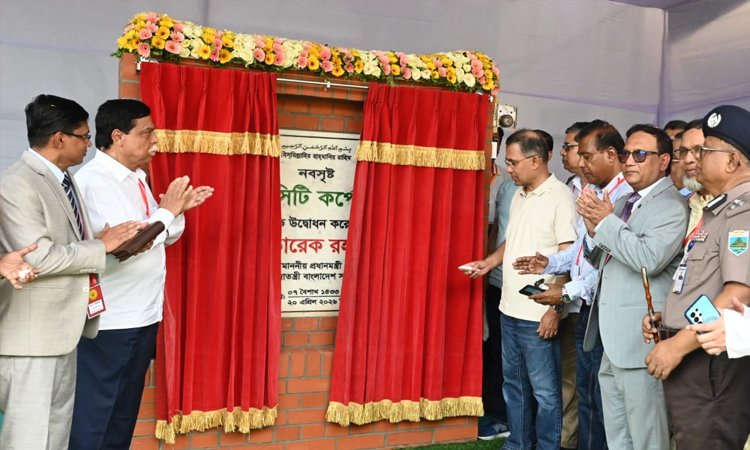
The formal launch of Bogura City Corporation marks a historic milestone in the administrative and urban development landscape of Bangladesh. The long-awaited transformation of Bogura from a municipality into a full-fledged city corporation represents not only an institutional upgrade but also a broader vision for regional growth, improved governance, and enhanced civic services in the northern part of the country. This development, officially announced on April 20, 2026, reflects years of demand from local citizens and stakeholders who had long argued that Bogura’s size, population, and economic importance warranted city corporation status.
The launch ceremony was led by Tarique Rahman, who unveiled the plaque of the newly established city corporation at the municipal building in Bogura. This symbolic act officially marked the transition of the 150-year-old Bogura Municipality into the country’s 13th city corporation, bringing it into the same administrative category as major urban centers such as Dhaka, Chattogram, and Rajshahi. The Prime Minister described the declaration as the fulfillment of a “long-standing demand” of the people of Bogura, emphasizing that the decision was rooted in both necessity and public aspiration.
Historically, Bogura has been one of the oldest and most significant municipalities in Bangladesh. Established in 1876 during the British colonial period, it gradually evolved into one of the largest municipalities in terms of area and population. Over time, the city expanded significantly, especially after a major administrative enlargement in 2006 that incorporated surrounding areas and increased the number of wards to 21. Despite its growth and importance as a commercial hub in northern Bangladesh, the city remained a municipality for decades, even as other urban centers were upgraded to city corporations. This delay contributed to a sense of deprivation among residents, who felt that Bogura had not received its fair share of development opportunities.
The inauguration of Bogura City Corporation thus represents the culmination of a prolonged administrative process and public advocacy. The Prime Minister, in his speech, stressed that while the declaration is a significant achievement, it is only the beginning of a larger journey toward transforming Bogura into a modern and well-planned urban center. He called on citizens, local leaders, and government officials to work together to build what he described as a “model city,” highlighting that government efforts alone would not be sufficient to achieve this goal. This emphasis on collective responsibility underscores the participatory approach needed for sustainable urban development.
With the establishment of the city corporation, Bogura now falls under a governance structure that allows for greater autonomy, improved planning, and enhanced delivery of public services. City corporations in Bangladesh are responsible for a wide range of functions, including urban planning, infrastructure development, waste management, water supply, public health, and education. As a city corporation, Bogura will be governed by an elected mayor and a council of representatives, enabling more localized decision-making and accountability. The new administrative framework is expected to facilitate more efficient service delivery and better resource allocation, addressing many of the challenges that the municipality previously faced.
Geographically and economically, Bogura holds a strategic position in Bangladesh. Located about 200 kilometers northwest of Dhaka, it serves as a key gateway to northern Bangladesh and is a major center for trade, agriculture, and industry. The city is known for its agricultural productivity, particularly in crops like red chili, and for its growing industrial sector, which includes small and medium enterprises involved in food processing, textiles, and machinery. The upgrade to city corporation status is expected to further boost economic activity by attracting investment, improving infrastructure, and enhancing connectivity.
The launch of Bogura City Corporation also carries significant implications for regional development. Historically, urban development in Bangladesh has been heavily concentrated in Dhaka and a few other major cities, leading to regional disparities. By upgrading Bogura to a city corporation, the government aims to promote balanced development and reduce pressure on existing metropolitan areas. This move aligns with broader national strategies to decentralize urban growth and create new economic hubs outside the capital.
In addition to its economic and administrative significance, the launch of the city corporation has social and cultural implications as well. Bogura is a city with a rich historical heritage, located near the ancient archaeological site of Mahasthangarh, one of the oldest urban settlements in the region. The city is also known for its vibrant cultural traditions and local specialities. The new city corporation framework provides an opportunity to preserve and promote this heritage while integrating it into modern urban development plans.
The inauguration event itself was part of a broader set of initiatives undertaken during the Prime Minister’s visit to Bogura. Alongside the declaration of the city corporation, several development programs were launched, including canal excavation projects, distribution of family cards, and the introduction of digital services such as e-bail bonds. These initiatives reflect a comprehensive approach to development that combines administrative reform with tangible improvements in public services and infrastructure.
Despite the optimism surrounding the launch, challenges remain. Transitioning from a municipality to a city corporation requires significant institutional capacity, financial resources, and effective governance mechanisms. Issues such as traffic congestion, waste management, water supply, and housing will need to be addressed systematically to ensure that the benefits of the upgrade are fully realized. Moreover, the success of the city corporation will depend on the ability of local authorities to implement long-term planning and engage with citizens in a transparent and accountable manner.
Another important aspect of the new city corporation is its governance structure. The corporation will consist of multiple wards, each represented by elected councillors, with a mayor serving as the chief executive. This structure is designed to ensure representation and participation at the grassroots level. However, as of the launch, key leadership positions were yet to be filled, pending elections and administrative arrangements. The timely organization of these processes will be crucial for the effective functioning of the new institution.
In conclusion, the launch of Bogura City Corporation represents a landmark development in Bangladesh’s urban governance and regional development strategy. It symbolizes the recognition of Bogura’s importance as a major urban center and reflects the government’s commitment to decentralization and balanced growth. While the upgrade brings new opportunities for economic expansion, improved services, and enhanced quality of life, it also places significant responsibilities on both the authorities and the people. The real success of this initiative will depend on how effectively the new city corporation can translate its expanded mandate into concrete outcomes, transforming Bogura into a truly modern, sustainable, and inclusive city.


