


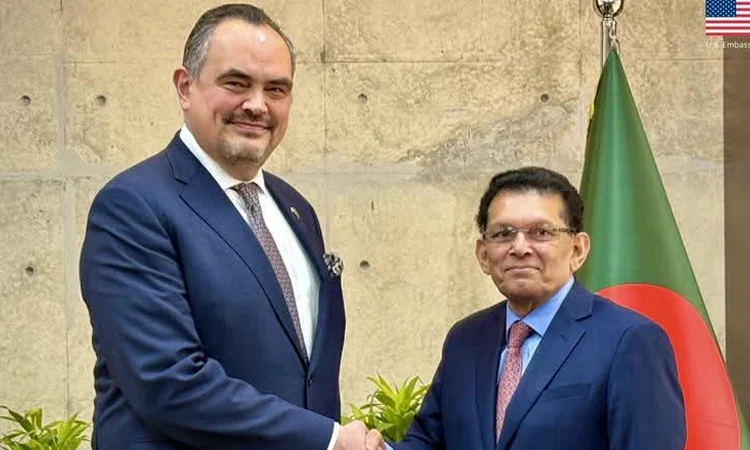
The recent statements made by the new United States envoy to Bangladesh, Brent T. Christensen, reflect a clear and strategic commitment to elevating Dhaka–Washington relations to what he and Bangladeshi officials have described as “new heights.” These remarks come at a significant moment in bilateral diplomacy, as both countries seek to redefine and deepen their partnership in the context of evolving geopolitical realities, economic opportunities, and shared development goals. The envoy’s vision, expressed through a series of meetings, policy dialogues, and official statements since his arrival in Dhaka in January 2026, highlights a multifaceted approach that integrates economic cooperation, democratic values, regional stability, and technological advancement.
From the outset of his tenure, Ambassador Christensen emphasized the long-standing foundation of relations between Bangladesh and the United States. Upon presenting his credentials, he underscored that the United States is “proud to call Bangladesh a friend,” noting that over more than five decades, the two countries have collaborated to promote regional stability, economic growth, and national sovereignty. This historical context is crucial, as it frames current diplomatic efforts not as isolated initiatives but as part of a continuous trajectory of cooperation that both sides are now seeking to expand and modernize.
A central theme in the envoy’s statements is the ambition to transform the bilateral relationship into a more robust economic partnership. Speaking at a high-level dialogue organized by the American Chamber of Commerce in Bangladesh, Christensen highlighted the importance of trade and investment as key drivers of stronger ties. He referred to the Agreement on Reciprocal Trade (ART) as a “transformative framework” that could significantly enhance trade flows and mutual investment between the two countries. This agreement is particularly significant because it seeks to balance trade relations by encouraging Bangladesh to import more high-quality American goods while maintaining favorable access to the US market.
The envoy also pointed to substantial commercial commitments as evidence of growing economic cooperation. Bangladesh’s pledge to import US agricultural products worth billions of dollars—including wheat, soybeans, cotton, and corn—illustrates the scale of potential trade expansion. Such initiatives not only strengthen bilateral economic ties but also contribute to Bangladesh’s food security and supply chain efficiency. Christensen’s emphasis on practical economic outcomes reflects a broader strategy of aligning diplomatic engagement with tangible development benefits.
However, the envoy made it clear that achieving these ambitions requires structural reforms within Bangladesh. He stressed the need for a predictable and transparent business environment, including stronger contract enforcement, reduced regulatory opacity, and fair taxation policies. These recommendations are not merely technical suggestions; they are part of a larger vision to position Bangladesh as an attractive destination for foreign direct investment, particularly from US companies. By linking reform to investment, Christensen effectively outlined a roadmap for how Dhaka–Washington ties can be elevated through economic modernization.
Another important dimension of the envoy’s statements is the growing focus on technology and digital transformation. Christensen highlighted the significant potential of Bangladesh’s digital economy, noting that a large portion of transactions in the country remains cash-based. This presents opportunities for expansion in digital financial services, with global firms such as Visa, Mastercard, and major technology companies showing increasing interest in Bangladesh’s market. The envoy also mentioned the involvement of companies like Microsoft and emerging technologies such as satellite internet services, indicating that technological cooperation is likely to become a key pillar of bilateral relations in the coming years.
Beyond economics and technology, the envoy placed considerable emphasis on governance and democratic values. In meetings with Bangladeshi officials, including the National Security Adviser, he reiterated the United States’ support for Bangladesh’s democratic transition and ongoing electoral reforms. This aspect of the relationship is particularly sensitive yet important, as it reflects the US position that sustainable development and political stability must go hand in hand. Christensen’s remarks suggest that Washington views democratic governance not as a separate issue but as integral to long-term partnership and mutual trust.
Security and regional stability also feature prominently in the envoy’s vision for enhanced ties. Bangladesh occupies a strategically important position in South Asia and the Indo-Pacific region, and the United States has consistently emphasized cooperation in maintaining a free and open regional order. While not always explicitly stated, this strategic dimension underpins many of the envoy’s initiatives, from economic engagement to infrastructure development. His commitment to working together to make both countries “safer, stronger, and more prosperous” encapsulates this holistic approach.
The envoy’s statements further highlight the importance of people-to-people connections and institutional collaboration. Issues such as immigration, visa policies, and the return of undocumented Bangladeshis were discussed in bilateral meetings, indicating a willingness to address complex and sometimes contentious topics through dialogue. These discussions are essential for building trust and ensuring that the relationship is not limited to high-level diplomacy but extends to the everyday experiences of citizens.
Infrastructure development represents another area where the envoy sees significant potential for cooperation. The United States has expressed readiness to support Bangladesh in modernizing key sectors such as railways, ports, and civil aviation, offering expertise in logistics and safety management. This aligns with Bangladesh’s broader development goals and its ambition to become a regional economic hub. By contributing to infrastructure modernization, the US can play a role in shaping Bangladesh’s economic future while strengthening bilateral ties.
It is also noteworthy that the envoy framed the relationship as entering a “new phase,” characterized by expanded engagement and shared prosperity. This language reflects a shift from traditional aid-based cooperation to a more equal partnership focused on mutual benefit. Bangladesh’s growing economic strength and strategic importance make it an increasingly valuable partner for the United States, and Christensen’s statements suggest that Washington is keen to capitalize on this evolving dynamic.
In conclusion, the statements of the new US envoy to Bangladesh present a comprehensive and forward-looking vision for Dhaka–Washington relations. By emphasizing economic partnership, governance reforms, technological collaboration, and regional stability, Ambassador Brent T. Christensen has outlined a multifaceted strategy aimed at taking bilateral ties to new heights. His approach reflects both continuity and change—building on decades of cooperation while adapting to new global realities and opportunities. As these initiatives unfold, the success of this vision will depend on the ability of both countries to translate diplomatic commitments into concrete actions, ensuring that the partnership delivers meaningful benefits for their জনগণ and contributes to broader regional stability and prosperity.


