


The verdict in the Abu Sayed murder case stands as one of the most emotionally charged and politically significant judicial decisions in Bangladesh’s recent history. It is not simply a criminal ruling—it is deeply intertwined with the country’s turbulent 2024 mass uprising, questions of state accountability, and the broader struggle for justice and democratic reform. Delivered on April 9, 2026, by the International Crimes Tribunal (ICT)-2, the judgment represents a defining moment for the victims of state violence and for the legal system itself.
A Nation Awaits Justice
From the early hours of the day, the atmosphere around the tribunal premises in Dhaka was tense and highly charged. Security was tightened, with law enforcement personnel deployed in large numbers to prevent unrest. Inside the courtroom, families of the victims, journalists, and legal representatives gathered in anticipation. The proceedings were broadcast live on national television, allowing millions across the country to witness the moment.
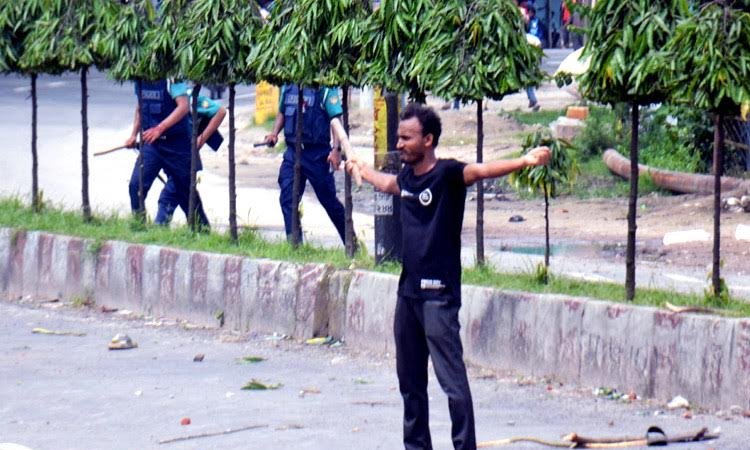
The tribunal began reading out its verdict shortly after noon. The judges opened with a solemn reflection on the circumstances of Abu Sayed’s death—an act that had already become etched in the national consciousness. According to the tribunal chairman, Sayed had stood with his arms outstretched, believing that those confronting him would not harm him. Instead, he was shot—a detail that encapsulated both the brutality of the incident and the symbolic innocence of the victim.
Who Was Abu Sayed?
Abu Sayed was a student at Begum Rokeya University in Rangpur and an active participant in the quota reform movement of 2024. He was not just another protester—he became the face of a generation demanding change.
On July 16, 2024, during a student protest, Sayed was shot by police. Video footage of the incident spread rapidly across social media, showing him standing defiantly before armed officers moments before being gunned down. The imagery shocked the nation and transformed him into what many consider the first martyr of the July uprising.
His death marked a turning point. The protests intensified, eventually contributing to a nationwide movement that led to the fall of the then-government. Thus, the murder case was never just about one individual—it became symbolic of state repression and resistance.
The Charges and the Trial
The case was prosecuted as a crime against humanity, reflecting the broader context of the 2024 uprising. A total of 30 individuals were accused, including police officers, university officials, and political figures.
The charges were extensive:
- Murder and attempted murder
- Abetment and conspiracy
- Command responsibility for violence
- Complicity in crimes against humanity
The investigation began in 2025, with formal charges filed later that year. The tribunal framed charges in August 2025 and began hearings shortly afterward. By January 2026, both prosecution and defense had concluded their arguments, and the case was kept under consideration until the verdict date was set.
The prosecution argued that Sayed’s killing was not an isolated incident but part of a systematic crackdown on protesters. The defense, on the other hand, sought acquittal, questioning the evidence and the interpretation of events.
The Verdict: Justice Delivered
When the tribunal finally delivered its verdict, it was both sweeping and severe.
Death Sentences
Two former police officers were sentenced to death:
- Former Assistant Sub-Inspector Amir Hossain
- Former Constable Sujan Chandra Roy
They were found directly responsible for the fatal shooting.
Life Imprisonment
Three senior police officials received life sentences for their roles:
- Former Assistant Commissioner Md Arifuzzaman
- Former Inspector Robiul Islam
- Former Sub-Inspector Bibhuti Bhushan Roy
Additional Sentences
The remaining accused received various prison terms, ranging from a few years to a decade. Among them were university officials, including the former vice-chancellor, who was sentenced to 10 years in prison.
Notably, many of the accused—24 out of 30—were tried in absentia, as they remained fugitives at the time of the verdict.
Reaction in the Courtroom
As the sentences were announced, emotions ran high. Family members of Abu Sayed, who had long demanded the harshest punishment, expressed a mixture of grief and relief. Before the verdict, they had publicly called for the death penalty, emphasizing the brutality of the killing and its impact on their lives.
When the judgment was delivered, many saw it as a step toward justice—not just for Sayed, but for all victims of the 2024 uprising.
However, the reactions were not universally celebratory. Human rights groups and legal experts raised concerns about the use of the death penalty and the broader implications of trying such cases under a crimes-against-humanity framework. These debates reflect ongoing tensions between demands for justice and concerns about due process.
A Landmark Legal Case
This verdict is significant for several reasons:
- Recognition of Crimes Against Humanity
By framing the case as a crime against humanity, the tribunal elevated it beyond a typical murder trial. It acknowledged that Sayed’s killing was part of a larger pattern of violence against civilians.
- Accountability of State Actors
The conviction of police officers and officials signals a rare instance of holding state actors accountable in Bangladesh. Historically, such cases have often faced challenges in prosecution.
- Judicial Response to Political Upheaval
The case reflects how the legal system responds to political crises. The 2024 uprising reshaped the country’s political landscape, and this verdict is one of its most tangible judicial outcomes.
The Broader Context: The 2024 Uprising
To fully understand the importance of the verdict, one must consider the broader context. The quota reform movement began as a student-led protest demanding changes in government job quotas. However, it quickly escalated into a nationwide uprising against perceived authoritarianism.
Abu Sayed’s killing became a catalyst. The viral footage of his death galvanized public opinion, drawing widespread condemnation and intensifying protests.
The uprising eventually led to major political changes, including the fall of the government. In this sense, the verdict is not just about past events—it is also about shaping the narrative of that historic movement.
Criticism and Controversy
Despite its significance, the verdict has not been free from controversy.
Concerns About Fair Trial Standards
Some critics argue that the tribunal system, originally established for war crimes, may not fully meet international standards for fairness when applied to contemporary cases.
Use of the Death Penalty
The sentencing of two individuals to death has sparked debate, particularly among human rights organizations that oppose capital punishment.
Trials in Absentia
The fact that many accused were tried without being present raises questions about enforcement and the long-term impact of the verdict.
Implications for Bangladesh
The impact of the verdict extends far beyond the courtroom.
Strengthening Rule of Law
If implemented effectively, the judgment could strengthen public confidence in the judicial system.
Political Messaging
The ruling sends a clear message about accountability, particularly for those in positions of power.
Historical Memory
The case will likely become a key part of Bangladesh’s historical narrative, shaping how future generations understand the events of 2024.
Conclusion: Justice, Memory, and the Future
The verdict in the Abu Sayed murder case is more than a legal decision—it is a moment of national reckoning. It confronts painful questions about state violence, accountability, and the value of human life.
For many, it represents justice long overdue. For others, it raises difficult questions about legal processes and punishment. But regardless of perspective, its significance is undeniable.
Abu Sayed’s death, once captured in a brief but haunting video, has now been transformed into a landmark judicial case. His story continues to resonate—not just as a symbol of resistance, but as a reminder of the cost of political संघर्ष.
As Bangladesh moves forward, the legacy of this verdict will depend on what follows: whether justice is fully implemented, whether reforms are sustained, and whether the lessons of the past are truly learned.
In the end, the case is not only about punishing the guilty—it is about defining the moral and legal boundaries of a nation striving to uphold justice in the face of its most difficult moments.


