


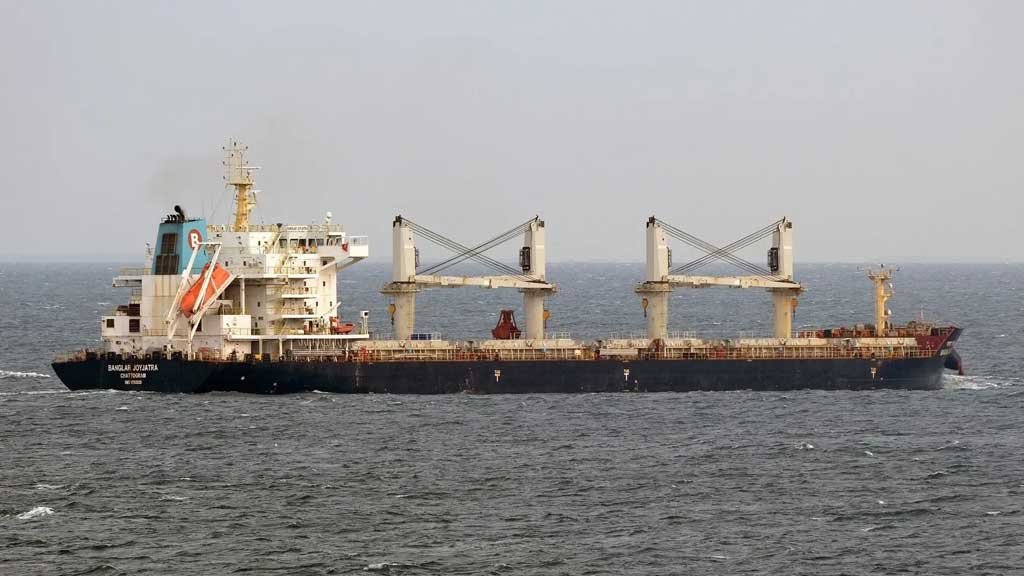
The recent failure of a Bangladeshi vessel to cross the Strait of Hormuz highlights the severe challenges facing global maritime trade amid escalating geopolitical tensions in the Middle East. The ship, Banglar Joyjatra, operated by the Bangladesh Shipping Corporation, has become a clear example of how international conflict can disrupt routine commercial operations. Its repeated inability to pass through one of the world’s most important shipping routes reflects not only immediate security concerns but also broader vulnerabilities within global trade systems.
The Strait of Hormuz is one of the most critical chokepoints in global trade, particularly for energy transportation. Under normal conditions, a large number of vessels pass through the strait every day, carrying a significant share of the world’s oil and gas supplies. However, since the escalation of tensions between United States and Iran in early 2026, traffic through the strait has been drastically reduced. Shipping activity has slowed to a minimal level, with only a limited number of vessels able to transit safely under strict monitoring. This decline has created a highly uncertain and risky environment, preventing many ships, including those from Bangladesh, from completing their journeys.
Against this tense background, the Bangladeshi vessel attempted multiple times to cross the strait but was unsuccessful on each occasion due to intervention by Iranian authorities. The ship had departed from anchorage near Sharjah after reports suggested that the waterway had been reopened for limited commercial movement. However, shortly after entering the strait, the vessel received direct communication from Iranian naval forces instructing all ships to stop, turn off engines, and wait for further clearance. This sudden directive forced the vessel to abandon its attempt and return to a safe location, marking another failed effort to navigate the route.
The failed attempt was not an isolated incident but part of a repeated pattern. The vessel had previously tried to cross the strait following a ceasefire announcement earlier in April 2026, but it was also denied passage at that time. Even after waiting for several days and coordinating its movement with other vessels, the ship was again stopped. These repeated failures demonstrate that while announcements about reopening the strait may have been made, actual navigation remains tightly controlled and unpredictable.
At the center of the situation is the broader crisis surrounding the Strait of Hormuz, which has effectively become a militarized zone. Iranian forces, particularly units linked to the Islamic Revolutionary Guard Corps, have asserted strict authority over the passage and warned that no vessel can transit without explicit permission. In practice, this has created a situation where the strait appears open in theory but remains largely closed in reality due to ongoing security risks. Several vessels from different countries have been stopped, inspected, or forced to turn back, reinforcing the perception that safe passage cannot be guaranteed.
For the Bangladeshi vessel, the consequences have been significant. The ship, carrying cargo and staffed by dozens of crew members, has remained stranded in the Persian Gulf for an extended period. Its inability to move forward has disrupted supply schedules and increased operational expenses. The uncertainty surrounding its status has also created logistical complications for the shipping company and its commercial partners. This prolonged delay illustrates how disruptions in a single strategic route can create widespread ripple effects across supply chains.
The situation affecting this vessel is part of a larger disruption impacting global shipping. Many vessels from various countries have encountered similar obstacles, with some even facing direct threats or enforcement actions. Iranian naval patrols have reportedly issued warnings, conducted inspections, and imposed strict controls on maritime movement. In such a high-risk environment, shipping operators are forced to carefully evaluate whether to proceed or delay operations, often choosing caution due to safety concerns.
Another major issue contributing to the failure is the lack of clear and consistent communication regarding transit permissions. In this case, the vessel’s operators reportedly sought authorization but did not receive a definitive response. Assuming that no objection indicated approval, the ship proceeded alongside others attempting to cross. However, the subsequent order to halt revealed the unpredictable and inconsistent nature of the situation. This lack of clarity has emerged as a key barrier to safe and efficient navigation.
The economic consequences of such disruptions are particularly serious for Bangladesh, which relies heavily on maritime trade for imports and exports. The inability of vessels to pass through the Strait of Hormuz has contributed to higher shipping costs, increased insurance premiums, and delays in the delivery of essential goods. War-risk insurance for ships operating in the region has become extremely expensive, further discouraging transit and adding financial pressure on shipping companies.
Beyond economic concerns, the situation also raises important issues regarding crew safety. Although the crew members aboard the Bangladeshi vessel remain unharmed, the overall environment in the region is highly dangerous. The presence of armed patrols, surveillance systems, and the risk of sudden military escalation has made commercial navigation increasingly hazardous. For seafarers, this represents not only a professional challenge but also a significant personal risk.
Diplomatically, the incident demonstrates the limits of bilateral relations during periods of broader geopolitical conflict. Bangladesh has historically maintained cooperative relations with Iran and might have expected smoother passage under normal circumstances. However, the ongoing conflict involving major global powers has overshadowed such expectations. Strategic considerations now dominate decision-making, reducing the influence of prior diplomatic goodwill.
The failure of the Bangladeshi vessel also reflects a breakdown in established maritime norms. Principles such as freedom of navigation, which typically ensure the smooth movement of international shipping, have been disrupted. In their place, unilateral controls and military enforcement have created an unpredictable and unstable system. This shift has raised concerns about the future of global shipping routes, particularly in conflict-prone regions.
Although a small number of vessels have managed to pass through the strait under special conditions, such cases remain rare. These isolated successes do not indicate a return to normal operations but rather highlight the exceptional circumstances under which passage is currently possible. For most shipping companies, including those from Bangladesh, the risks remain too high to ensure reliable transit.
In conclusion, the failure of the Bangladeshi vessel to cross the Strait of Hormuz reflects the broader crisis affecting one of the world’s most vital maritime routes. The incident demonstrates how geopolitical conflict, military control, communication challenges, and economic pressures can combine to disrupt global trade. While the vessel’s crew remains safe, the repeated inability to complete its journey underscores the serious challenges faced by maritime operators. Until the underlying tensions are resolved and stable conditions are restored, such disruptions are likely to continue, posing ongoing risks to international commerce and economic stability.


