


Reflections on labour, dignity, and the unfinished struggle in Bangladesh
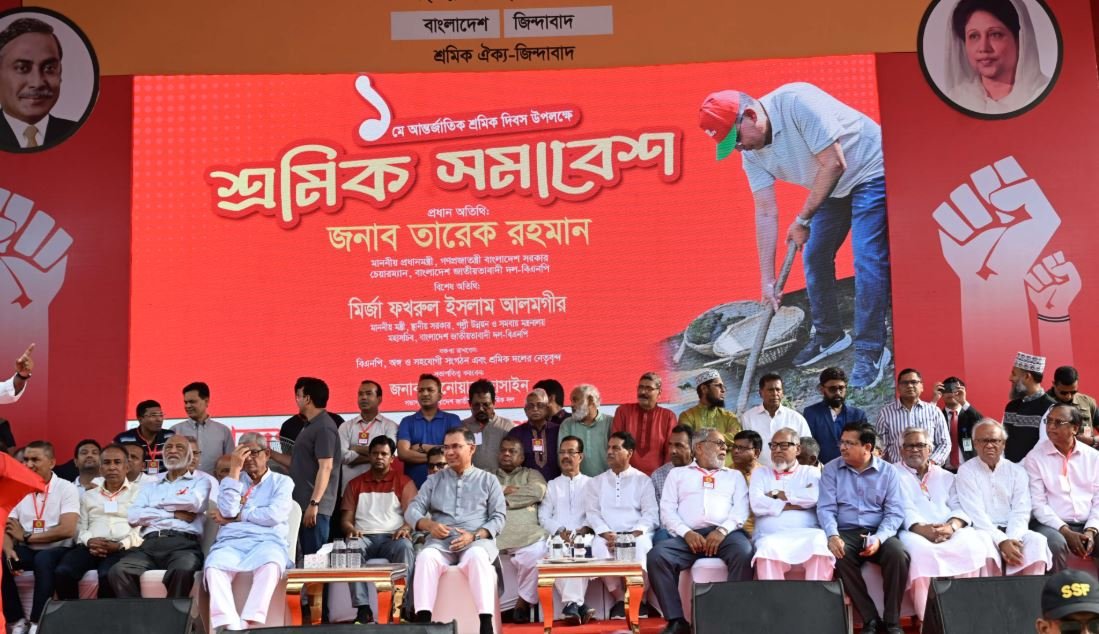
Every year, May 1 arrives in Bangladesh with familiar rhythms—red flags fluttering in processions, speeches from podiums, promises of reform, and a public holiday that briefly pauses the machinery of a nation built on labour. Yet behind the ceremonial observance of May Day 2026 lies a deeper, more uncomfortable truth: for millions of Bangladeshi workers, the struggle for dignity, fair wages, and safe working conditions remains far from over.
This year, May Day comes at a moment of both hope and contradiction. Bangladesh’s labour landscape is undergoing policy shifts, legal amendments, and renewed international scrutiny. At the same time, the lived reality of workers—especially in the informal and export-oriented sectors—continues to be marked by insecurity, low wages, and limited protection.
A Nation Built on Labour, Still Searching for Justice
Bangladesh’s economy rests heavily on the shoulders of its working class. From the sprawling garment factories of Dhaka and Narayanganj to construction sites, transport hubs, farms, and informal street economies, labour is the invisible infrastructure of national growth.
The ready-made garment sector alone employs millions, most of them women, and accounts for a significant share of export earnings. Yet the workers who power this industry often remain at the margins of economic security. Calls for fair wages, safer workplaces, and effective union rights echo every May Day, but implementation remains uneven.
Trade union leaders and labour activists continue to emphasize that basic rights—such as the eight-hour workday, safe working conditions, and collective bargaining—are still not fully realized across sectors. Many workers, particularly in informal employment, remain outside formal legal protections altogether.
Reform on Paper, Uneven Reality on the Ground
In 2026, Bangladesh has introduced and amended several labour-related policies aimed at strengthening worker protection and aligning with international standards. Recent reforms include provisions for improved workplace safety mechanisms, dispute resolution systems, and efforts to streamline trade union registration processes.
A notable development this year is the emphasis on institutional reforms such as workplace accident compensation mechanisms and expanded labour inspection frameworks. These steps have been welcomed by international labour organizations, which see them as movement toward stronger compliance with global labour norms.
However, policy announcements often face delays in implementation. Labour inspectors remain insufficient in number relative to the size of the workforce, and enforcement capacity varies widely across industries and regions. As a result, the gap between law and lived experience continues to define Bangladesh’s labour landscape.
The Informal Majority: Invisible but Essential
One of the most pressing realities of Bangladesh’s labour situation is the dominance of informal employment. A large share of workers are engaged in daily wage labour, domestic work, agriculture, transport, and small-scale urban services—sectors where regulation is minimal and job security is virtually nonexistent.
For these workers, May Day is not always a day of rest or celebration. It is often just another day of survival. Many continue to work despite the holiday, driven by the necessity of daily income. This disconnect between symbolic recognition and material reality highlights a central contradiction in the country’s labour narrative.
Wage instability, lack of contracts, and absence of social protection leave informal workers particularly vulnerable to economic shocks and inflationary pressures. In such conditions, the idea of “decent work” remains aspirational rather than achieved.
The Garment Sector: Progress and Persistent Pressure
The ready-made garment industry remains both a symbol of national economic success and a focal point of labour rights debates. Over the years, the sector has seen improvements in factory safety, compliance standards, and international monitoring—especially following global attention on workplace disasters in the past decade.
Yet challenges persist. Wage levels remain a central point of contention, especially as living costs rise. Labour unrest and periodic protests reflect ongoing dissatisfaction with wage structures and working conditions. International buyers and brands continue to influence compliance standards, but local enforcement remains critical for sustainable improvement.
The tension between global competitiveness and domestic labour welfare continues to shape the sector’s evolution in 2026.
Workers’ Voices: Between Hope and Fatigue
Across Bangladesh, workers’ voices remain consistent in their demands: fair wages, job security, safe working environments, and respect for labour rights. What changes is not the message, but the context in which it is repeated year after year.
For many labour activists, May Day has become both a reminder of historical struggle and a measurement of unfinished progress. The sentiment is often one of cautious hope mixed with frustration—hope that reforms will take root, and frustration that change is slow and uneven.
As one labour rights perspective often echoed in public discussions suggests, symbolic observance alone is insufficient without real empowerment of workers in decision-making processes and workplace governance.
A Globalized Economy, Local Realities
Bangladesh’s labour situation cannot be understood in isolation from global economic forces. Export dependency, supply chain pressures, and international compliance expectations all shape domestic labour conditions.
While global demand has created employment opportunities, it has also intensified pressure on wages and production timelines. This duality—growth alongside vulnerability—defines much of the country’s labour discourse.
At the same time, migration remains a critical dimension of labour survival. Many Bangladeshis continue to seek employment abroad in search of better wages and working conditions, reflecting both opportunity and systemic limitations at home.
May Day 2026: A Call Beyond Ceremony
As May Day 2026 is observed, the challenge is not the absence of recognition, but the depth of transformation required. Bangladesh has made measurable progress in labour governance, policy development, and international engagement. Yet structural inequalities in the labour market persist.
The future of labour rights in Bangladesh will depend not only on legislation, but on enforcement, institutional capacity, and the meaningful inclusion of workers in shaping the systems that govern their lives.
May Day should not remain a ritual of speeches alone. It must evolve into a moment of accountability—where promises are measured against reality, and progress is judged not by declarations, but by the lived dignity of workers across the country.
Until then, the red flags of May Day will continue to wave over a nation still negotiating the true meaning of labour justice.


